
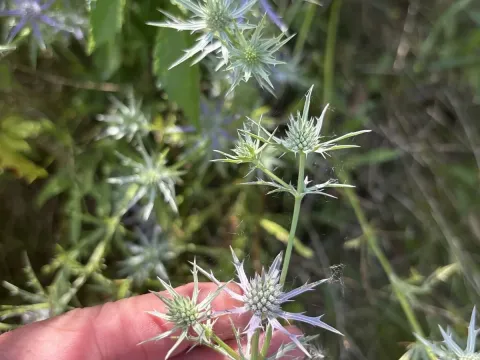
Eryngium hookeri
Eryngium hookeri
Eryngium hookeri, belonging to the Apiaceae family, is a distinct plant known for its structural beauty and ecological resilience. The sowing process typically begins with cold stratification, as seeds often require exposure to low temperatures to break dormancy effectively.
What the section contains
Eryngium hookeri
Direct seeding in the field should occur in late autumn or early spring once the soil temperature is suitable for germination. The seeds need to be sown shallowly or surface-sown, as they require light to germinate, making deep burial a common mistake that leads to poor emergence.
In nursery settings, seeds are sown in trays using a well-draining, sterile medium. Controlled environment conditions, including supplemental lighting and moderate temperatures, ensure high-quality seedlings that are robust enough for later field transplantation.
Transplanting usually takes place when the seedlings have reached a stable growth stage, typically showing two to three true leaves. Ensuring minimal root disturbance during this process is crucial for successful establishment in the final location.
Optimal spacing is essential to allow air circulation between the plants. Maintaining a distance of at least 30–40 centimeters ensures that each plant has enough room to develop its characteristic basal rosette and later flower stems without competition.
This crop thrives in well-drained, sandy, or gravelly soil profiles. The plant is inherently sensitive to waterlogged conditions, which can lead to rapid root decay, emphasizing the importance of site selection and soil amendment for drainage.
Full sun is a strict requirement for Eryngium hookeri. Adequate exposure to direct sunlight is necessary for the development of its signature blue pigments and strong, upright stems that prevent lodging during the flowering phase.
The species exhibits remarkable drought tolerance, making it an excellent candidate for regions with erratic rainfall. It is capable of accessing deep soil moisture, though supplementary irrigation may be necessary during extreme, prolonged dry spells in the early growth stages.
Soil nutrient requirements are moderate, and excessive fertilization should be avoided. The plant performs best in soils with low to medium fertility, as high nitrogen levels can lead to succulent growth that is more susceptible to pests and fungal infections.
Ongoing field management involves regular monitoring of soil compaction, especially in areas with high traffic. Keeping the root zone well-aerated is vital for the plant's overall health and ability to withstand environmental stress.
The primary threats to Eryngium hookeri are fungal diseases associated with excessive moisture. Root rots and crown rots are the most common issues, particularly in sites where soil drainage is inadequate or atmospheric humidity remains high for extended periods.
Foliar diseases, such as leaf spot, can appear during humid seasons, necessitating the removal of affected leaves to prevent spread. Ensuring proper spacing and airflow is the most effective preventative measure against these fungal pathogens.
Pests like aphids and spider mites can occasionally affect the plant during stressful periods. Integrated pest management, including the use of targeted biological controls or appropriate insecticidal soaps, is recommended when pest populations reach economic thresholds.
Good weed control is necessary, as competition from aggressive weeds can stunt the growth of young Eryngium plants. Hand-weeding is preferred over chemical interventions near the sensitive root systems to avoid incidental damage.
- Select well-draining planting sites.
- Ensure full sun exposure for development.
- Practice proper spacing to enhance ventilation.
- Monitor for early signs of fungal infection.
- Keep the root zone free from competing weeds.