
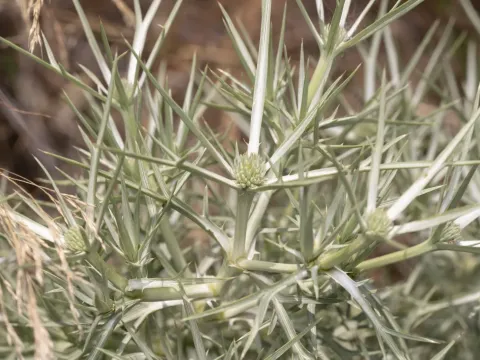
Eryngium glomeratum
Eryngium glomeratum
Eryngium glomeratum is a perennial herbaceous plant belonging to the Apiaceae family. It is typically propagated by seeds, which require a cold stratification period to ensure uniform germination in the spring.
What the section contains
Eryngium glomeratum
Seeds should be sown in prepared, well-draining soil at a shallow depth, as they require light and air to initiate successful germination processes.
When starting from seeds, spacing between plants is critical. Proper distance allows for optimal airflow, which is essential to prevent fungal diseases that often affect this species.
Sowing in autumn is generally preferred in warmer climates, allowing seeds to experience natural winter conditions, which significantly improves the germination rate.
For container-grown seedlings, use a light, sandy substrate. Ensure that the young plants are transplanted to their permanent location before the root system becomes too cramped.
This species thrives in full sun conditions. Exposure to intense sunlight is necessary to develop its unique foliage color and sturdy stems, characteristic of the genus.
The plant is highly adaptable to various soil types but demonstrates the best growth results in loose, well-drained, sandy or stony soils with a slightly alkaline pH.
Water requirements for Eryngium glomeratum are relatively low once established. The plant is drought-tolerant and performs well even in arid regions with minimal precipitation.
Drainage is the most important factor for this crop. Waterlogging, especially during winter months, is detrimental and leads to root rot, which is the leading cause of plant loss.
Regular maintenance involves keeping the site free from aggressive weeds that might compete for nutrients and light during the early stages of plant establishment.
Fungal root rots remain the primary threat to the stability of Eryngium glomeratum populations, particularly in poorly drained environments with high humidity.
Powdery mildew may occur on the leaves during humid summer periods, necessitating the removal of affected parts and improved ventilation between individual plants.
Pests such as aphids and spider mites can attack the plants during stressful periods, including prolonged droughts or excessive heat, weakening the plant's vigor.
- Monitor for slugs and snails during the spring when new, tender growth is emerging.
- Implement crop rotation strategies to minimize the buildup of soil-borne pathogens.
Maintaining a clean growing area by clearing organic debris from around the base of the plants reduces the likelihood of insect infestation and fungal infection.
Harvesting for medicinal or floral purposes should occur during peak bloom when the plant's metabolic activity is at its highest, ensuring maximum yield of active compounds.
Use sharp, disinfected shears for harvesting. Clean cuts help the plant recover quickly and prevent pathogens from entering the vascular system through wounds.
Post-harvest, the material should be dried in a darkened, airy room. Avoid direct sunlight during the drying process to prevent the degradation of its natural color and oils.
For decorative uses, the flower heads are harvested as soon as they reach their mature blue color, allowing for extended shelf life in dry arrangements.
Once dried, the crop must be stored in cool, dry conditions away from moisture, which can cause molding even in processed plant material.