
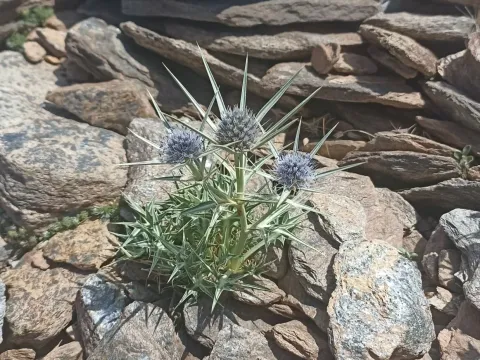
Eryngium glaciale
Eryngium glaciale
Sowing seeds of Eryngium glaciale should ideally take place in late autumn to allow for natural stratification, which is essential for uniform germination.
What the section contains
Eryngium glaciale
If starting seeds indoors, they must be kept in a cold environment at temperatures near freezing for at least four to six weeks to break seed dormancy.
The seeding substrate must be extremely porous, using a mix of peat-free compost, sand, and fine grit to prevent any water retention issues during early development.
Seedlings should be moved to individual pots as soon as they are large enough to handle, being careful to keep the deep taproot intact to ensure healthy growth.
Transplanting into the permanent garden site should be done in early summer when the soil has fully warmed up and all danger of night frosts has passed.
Eryngium glaciale is a specialized perennial belonging to the Apiaceae family, native to the high-altitude peaks of the Sierra Nevada mountains.
It is perfectly adapted to harsh environments and thrives in rocky, gravelly soils that are neutral to slightly alkaline in their chemical composition.
The plant requires full sun exposure and will struggle to maintain its compact, silver-toned habit if placed in even partial shade throughout the day.
Excellent drainage is the most vital requirement for cultivation; the soil should never stay wet, as the plant is highly susceptible to root rot in damp conditions.
This species is exceptionally drought-tolerant once established and does not require regular watering, making it an excellent candidate for xeriscaping projects.
The primary threat to this species in cultivated settings is fungal root rot, usually triggered by poor drainage or heavy, water-retentive clay soils.
During humid and warm weather, fungal leaf spots may occur, requiring the removal of infected foliage to prevent the spread of spores to healthy parts.
Slugs and snails pose a significant threat to young plants, as they find the tender, emerging foliage highly attractive during the moist spring months.
In some regions, aphids may congregate on the flower stems; if infestations are detected, localized treatment with insecticidal soap is recommended.
Maintaining a clean, grit-mulched surface around the base of the plant is the best strategy to keep foliage dry and reduce the likelihood of pest and disease outbreaks.