
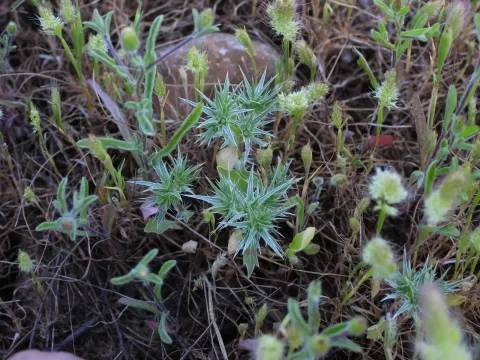
Eryngium galioides
Eryngium galioides
Eryngium galioides is a perennial herbaceous plant belonging to the Apiaceae family. It is distinct for its specific ecological niche, native to the sandy soils of the Iberian Peninsula, where it thrives in saline and nutrient-poor environments, showcasing remarkable drought tolerance.
What the section contains
Eryngium galioides
The botanical structure of the plant features rigid, prickly leaves and clustered, head-like inflorescences. The overall appearance is silvery-blue, protected by a waxy cuticle that minimizes transpiration, an adaptation critical for survival in arid coastal habitats.
Agricultural cultivation requires a substrate that mimics its natural habitat. Extremely well-drained, sandy, or gravelly soil is essential. Even a brief period of waterlogging can be fatal to the root system, making site selection the most important factor in the success of the crop.
Exposure to full sunlight is non-negotiable for this species. In shaded conditions, the plant fails to develop its characteristic stiff stems and deep blue pigmentation, which are essential attributes for its commercial value in the dried flower industry.
As a specialized crop, it is primarily used in professional floristry and landscape design. Its ability to retain structure and hue after harvesting makes it a valuable commodity for wholesalers supplying materials for dry floral arrangements.
Root rot is the primary physiological and pathological threat to Eryngium galioides. Excessive soil moisture levels often lead to the rapid proliferation of pathogens such as Phytophthora or Pythium, which can decimate an entire plantation within a short period.
Insect pests, including aphids and thrips, may infest the tender developing inflorescences. These pests not only weaken the plant through sap-sucking but can also serve as vectors for secondary viral infections that distort the stem shape.
Fungal leaf spot diseases are common when ventilation is insufficient. Stagnant air trapped between plants in a densely packed field allows moisture to linger on the foliage, creating an ideal environment for pathogenic fungi to establish colonies.
Integrated Pest Management (IPM) is strongly recommended to protect the crop. This involves regular monitoring, optimal spacing during planting, and the use of organic fungicides only when strictly necessary to maintain the market quality of the harvested stems.
Preventive maintenance includes ensuring the site has a slight slope or improved drainage layer to avoid water accumulation during rainy seasons, which is the most critical protective measure for this species.