
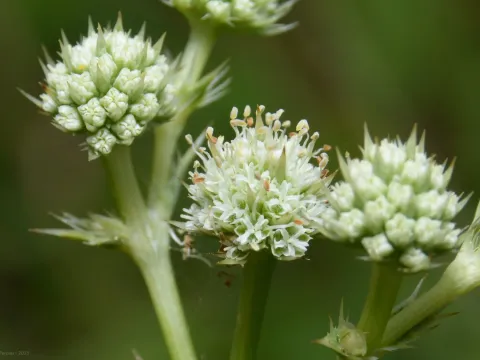
Elegant eryngo
Eryngium elegans
Sowing seeds of Eryngium elegans in the open field is primarily carried out in the spring, during April or May, once the soil has warmed up. Late autumn sowing in October is also a viable option, allowing for natural stratification of the seeds during the winter months.
What the section contains
Elegant eryngo
For greenhouse or indoor production, seeds are sown in containers during February or March. Successful germination requires a cold stratification period of 4–6 weeks at temperatures around +4 to +5 degrees Celsius to break seed dormancy.
Seeds should be planted at a shallow depth of approximately 0.5 to 1 centimeter. It is crucial to maintain moderate soil moisture, as waterlogged conditions can lead to seed rotting before germination occurs in the cold spring soil.
Optimal temperatures for steady seedling emergence range between +18 and +20 degrees Celsius. Pricking out should be done at the two-leaf stage, transferring seedlings into individual pots to avoid damaging the delicate taproot system during future transplanting.
Transplanting to the permanent field site occurs in late May, maintaining a spacing of 30–40 centimeters between individual plants. This spacing ensures proper development of the basal leaf rosettes and provides sufficient airflow to prevent stagnant humidity.
Elegant eryngo, a member of the Apiaceae family, is a sun-loving crop. It requires full exposure to direct sunlight throughout the day to develop the characteristic steel-blue coloration of its stems and inflorescences, which is its primary ornamental trait.
The plant performs best in well-drained, sandy, or rocky soils. It is highly intolerant of heavy clay soils that retain moisture, as these conditions are the leading cause of crown and root rot during the dormant winter period.
This crop exhibits remarkable drought tolerance, making it an efficient choice for arid regions with limited irrigation resources. Excessive fertilization, particularly with organic matter, should be avoided as it promotes leafy growth at the expense of floral development.
Elegant eryngo can thrive in nutrient-poor soils, which minimizes the need for synthetic mineral fertilizers. A single application of a balanced fertilizer at the start of the budding phase is usually sufficient to support high-quality ornamental production.
The species is frost-hardy and adapts well to temperate climate zones. It does not require winter covering, provided that the planting site is graded to prevent the accumulation of meltwater, which is the most common cause of winterkill.
Commercial use of Eryngium elegans is focused on the production of fresh-cut flowers for floristry and use in dried arrangements. The yield of high-quality stems depends heavily on planting density and the quality of sunlight received by the plantation.
Under optimal agronomic conditions, a field can produce 10–15 quality stems per square meter. Harvesting for dried flower production is conducted when the inflorescences are fully developed and have acquired their most intense metallic blue shade.
Drying is performed by hanging the cut stems in a dark, well-ventilated space. This process preserves the structural integrity and the vivid color of the flowers, ensuring they remain highly attractive for decorative arrangements throughout the winter season.
This plant is an excellent nectar source, attracting a wide array of pollinators to the area. Its presence in an agricultural landscape supports local biodiversity and can contribute to better pollination rates for nearby crops that require insect activity.
A productive stand typically lasts 4–5 years. After this cycle, the plants often show reduced vigor and flowering potential due to the aging of the taproot system, necessitating a planned rotation or rejuvenation of the planting stock.
The most significant threat to Eryngium elegans is root rot caused by poor soil drainage and excessive moisture. This fungal infection can destroy an entire stand if the plants remain in soggy conditions, especially after heavy spring rains.
Young seedlings are highly susceptible to damage from slugs and snails. Effective control measures include the use of physical barriers or targeted biological controls to protect the vulnerable young foliage during the establishment phase in spring.
In densely planted areas with low airflow, powdery mildew can emerge, appearing as a white dusty coating on the foliage. Improving plant spacing and reducing overhead humidity are the primary cultural practices used to prevent the spread of this infection.
Aphids may infest the flower buds during prolonged hot and dry spells. If detected, treating with systemic insecticides or gentle horticultural soaps helps to manage the populations without causing significant damage to the floral tissues.
Sanitary management of the plantation is essential; removing dead plant debris at the end of the season reduces the risk of overwintering pathogens. Keeping the field clean helps maintain the health and longevity of the Eryngium stand for years to come.