
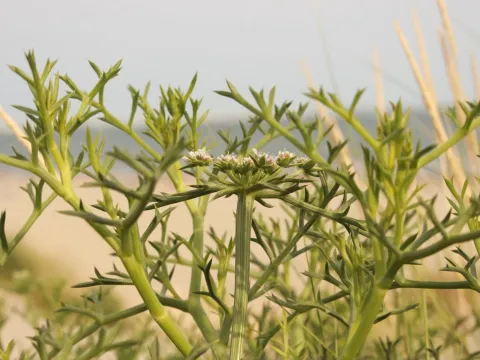
Echinophora
Echinophora
Sowing of Echinophora is primarily performed in the spring, once the soil has warmed to at least 10–12°C. Seeds should be sown at a shallow depth of 2–3 cm, as the species is sensitive to deep burial and requires adequate contact with fine-textured soil.
What the section contains


Echinophora
Stratification of seeds prior to sowing can significantly improve germination rates, as the species often possesses a degree of physiological dormancy. Moist, cold treatment for several weeks helps overcome this natural barrier.
Widely spaced rows, typically 60–70 cm apart, are recommended for field cultivation. This spacing ensures sufficient air circulation and provides ample space for mechanical weeding and plant development.
Fall sowing is an alternative in regions with mild winters, allowing seeds to benefit from early spring moisture. However, growers must monitor drainage to prevent the seeds from rotting in cold, waterlogged soil.
Seed density should be calculated based on the desired plant population. Overcrowding can lead to poor development of the root system and lower the overall quality of the harvested aerial parts.
Echinophora is a highly drought-tolerant plant adapted to sunny, semi-arid environments. It thrives in open, unshaded conditions and performs poorly in environments with low light levels or high humidity.
The plant performs best in light, sandy, or stony soils that offer exceptional drainage. It is notoriously susceptible to root rot if grown in heavy clay or water-retaining soils that experience periods of stagnation.
A neutral to slightly alkaline soil pH is ideal for this genus. While the plant can tolerate nutrient-poor substrates, moderate fertilization with phosphorus and potassium can enhance root growth and stress resistance.
Optimal temperatures for active growth range between 20°C and 28°C. The species is well-adapted to wide diurnal temperature fluctuations, which are common in its native steppe and Mediterranean-like habitats.
Water requirements are relatively low compared to traditional vegetable crops. The plant’s deep-reaching taproot allows it to access subsoil moisture, making it a reliable performer in regions with limited rainfall.
Fungal pathogens, particularly those causing root and crown rots, represent the most significant threat to Echinophora. These conditions are almost always linked to poor drainage or excessive soil moisture levels.
Insect pests, including aphids and various root-boring larvae, can damage the foliage and subterranean parts of the plant. Monitoring and early identification are essential to preventing widespread infestation.
Crop rotation is a critical component of integrated pest management for this species. Avoiding consecutive planting in fields previously occupied by other Apiaceae helps prevent the build-up of specific soilborne diseases.
Maintaining a weed-free field is vital, as weeds often act as hosts for viruses and insect vectors. Clean cultivation practices help ensure the health and longevity of the Echinophora stand.
If chemical interventions are necessary, growers should carefully select products that do not leave residues, as the plant is frequently used in culinary or medicinal applications where safety is paramount.