
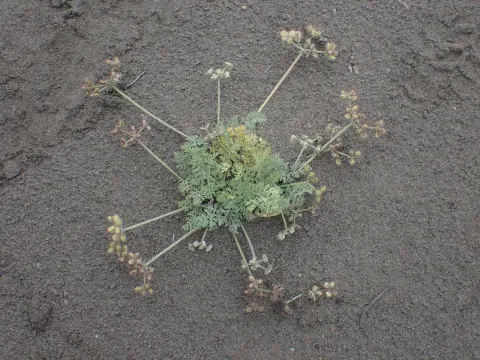
Dwarf carrot
Daucus pumilus
Dwarf carrot (Daucus pumilus) is an annual herbaceous plant belonging to the Apiaceae family. As a wild species related to the common domesticated carrot, it does not produce the fleshy taproot typically found in agricultural varieties. It is recognized primarily for its role in the coastal ecosystems of the Mediterranean.
What the section contains
Dwarf carrot
The species is native to sandy and rocky coastal environments where it has evolved to thrive in harsh, nutrient-poor conditions. Its geographic distribution is centered around the Mediterranean basin, where it acts as a pioneer species on coastal dunes and exposed maritime terrain.
Botanically, the plant is characterized by a low-growing or decumbent habit and finely divided, feathery leaves. The flowers are arranged in complex umbels, which are diagnostic of the carrot family. The plant exhibits high phenotypic plasticity depending on the availability of nutrients and water during the growing season.
Dwarf carrot requires full sun exposure and excellent soil drainage for optimal development. It has developed specific mechanisms to tolerate saline soils and coastal winds, which would be detrimental to many other species. It thrives in soils with low organic matter content, typically found in dune habitats.
While this plant lacks direct culinary use, it is of significant interest to botanists and plant breeders. Its genetic makeup contains traits related to environmental stress tolerance, which are highly valued in efforts to improve the resilience of cultivated carrot crops against drought and salinity.
Dwarf carrot populations are susceptible to powdery mildew, a fungal infection that thrives in environments with variable humidity. This disease can significantly reduce the vitality of the plant by covering the leaves and inhibiting the process of photosynthesis.
Aphids represent a primary threat to this species, often clustering on the developing stems and inflorescences. These pests extract plant fluids, causing stunted growth and deformities that reduce the reproductive success of the plant during the season.
Root-knot nematodes are common in the sandy soils where this plant grows, posing a hidden threat to the root system. Infestation leads to nutrient deficiencies and can make the plant significantly more vulnerable to other environmental stressors.
Leaf spot diseases, caused by various fungal pathogens, are a persistent issue under humid conditions. These infections cause the premature loss of foliage, which weakens the plant and limits its ability to produce viable seeds before the end of its life cycle.
Insects such as the umbellifer moth can cause damage to the flowering structures. This disruption of seed production is a major factor in the population dynamics of the species, potentially limiting its survival in competitive natural habitats.