
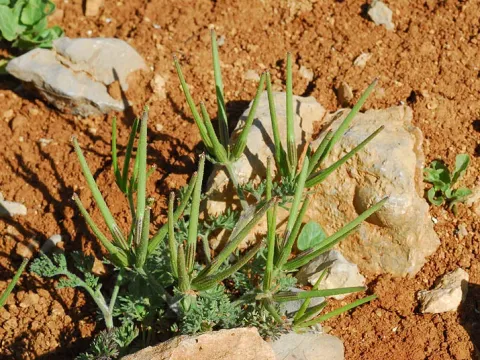
Durieu's carrot
Daucus durieua
Durieu's carrot (Daucus durieua) is a botanical species belonging to the Apiaceae family. Unlike common commercial carrots, this species maintains characteristics typical of its wild ancestors found in North African habitats.
What the section contains
Durieu's carrot
The plant is native to arid and semi-arid zones, primarily in Algeria and Morocco. Its physiological adaptations allow it to survive in rocky and sandy soils, demonstrating high resilience to drought-prone environments.
For cultivation purposes, Daucus durieua requires well-draining soils with excellent aeration. Compacted soils prevent the proper penetration of the taproot, which is essential for the plant's development and nutrient storage capacity.
Sunlight is a critical factor for this species. It is highly adapted to high-intensity solar radiation, and adequate exposure is necessary to support its metabolic processes and the synthesis of protective phytochemicals.
Temperature management should mimic the Mediterranean climate, with mild winters and warm, dry summers. The plant is not frost-tolerant and should be grown in environments where thermal shocks are kept to a minimum.
The primary threats to Daucus durieua involve typical carrot pests, such as the carrot rust fly (Psila rosae). These insects target the root system, causing severe physiological stress and reducing the overall vitality of the plant.
Fungal diseases, including leaf blight and various root rot agents, are prevalent when moisture levels exceed the plant's natural adaptation range. Poor air circulation around the canopy is often a primary cause of such outbreaks.
Managing the surrounding flora is essential, as many common weeds act as alternative hosts for diseases and pests that affect the carrot family. Maintaining clean rows is a fundamental part of the crop management strategy.
Integrated pest management (IPM) techniques are highly recommended. This includes the use of physical barriers, such as floating row covers, and the strategic rotation of crops to disrupt the life cycles of target insects.
Frequent scouting and the use of pheromone traps can help detect the presence of pests at an early stage. This allows for targeted intervention and helps maintain the health of the Daucus durieua population without excessive reliance on synthetic pesticides.