
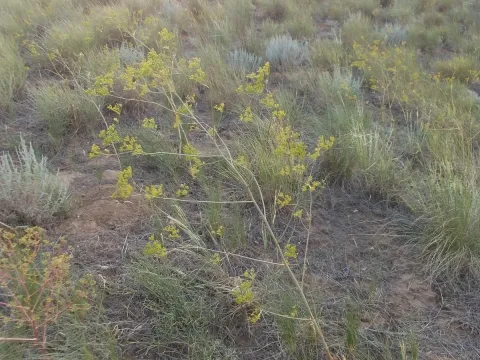
Elaeosticta lutea
Elaeosticta lutea
Elaeosticta lutea belongs to the Apiaceae family, characterized by a complex root system and specific requirements for seed germination under field conditions.
What the section contains
Elaeosticta lutea
Sowing should ideally occur in late autumn or early spring to allow the seeds to undergo necessary temperature changes, which significantly improves emergence uniformity.
The seeds are relatively small and should be sown at a shallow depth of approximately 1 centimeter, ensuring they are covered with loose, fertile soil to prevent drying out.
In industrial settings, precise row spacing is essential for mechanical weeding and air circulation, typically ranging from 50 to 70 centimeters between rows.
Proper field preparation, including deep plowing and harrowing, is crucial as the plant requires well-aerated soil to develop its deep primary taproot effectively.
This species is well-adapted to arid and semi-arid environments, demonstrating high resilience to water scarcity and high solar irradiance throughout the growing season.
It thrives best in well-drained, sandy, or stony soils that prevent waterlogging, as the species is highly susceptible to root decay in stagnant moisture conditions.
Temperature tolerance is a hallmark of this plant, allowing it to flourish in diverse climates ranging from cool spring weather to hot, dry summer periods.
The crop does not require excessive nitrogen fertilization; in fact, moderate applications of potassium and phosphorus are sufficient to support seed production.
Sun exposure is a critical factor for the plant's essential oil development, making open-field cultivation without shading the preferred choice for commercial yields.
The yield potential of Elaeosticta lutea is primarily dependent on the plant density and the environmental conditions during the flowering phase of the crop cycle.
Harvesting typically occurs when the seeds reach physiological maturity, indicated by a change in color and moisture content reduction in the umbels.
The seed output can be substantial, especially when the plant is grown under optimal irrigation regimes during its peak vegetative growth phase in early summer.
Post-harvest processing involves drying the harvested material under shade to maintain the chemical integrity of the volatile compounds present in the seeds.
Proper storage conditions, including low humidity and cool temperatures, are necessary to preserve the quality and viability of the harvest for future use.
Fungal pathogens such as mildew and root rot represent the primary biological threats, particularly during seasons with abnormal humidity and poor drainage.
Various insect pests, specifically aphids and certain larvae, can compromise the integrity of the umbels, leading to significant yield losses if left unmanaged.
Integrated pest management (IPM) strategies, including crop rotation and the introduction of natural predators, are recommended to maintain healthy plant stands.
Weed control is vital during the first stages of establishment, as young plants are highly sensitive to competition for nutrients and solar energy from fast-growing weeds.
Monitoring for signs of viral infections is also advised, as some vectors present in the fields can transmit diseases that weaken the plant's immune system.