
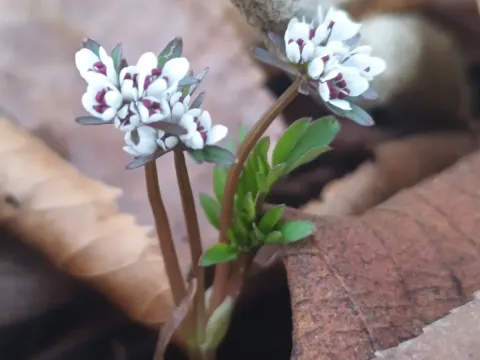
Erigenia
Erigenia
Erigenia (Erigenia bulbosa) is a spring ephemeral that reproduces primarily through seeds or vegetatively via daughter tubers. In cultivation, seeds should be sown immediately after maturation in late spring or early summer, as they require a dormancy period and natural stratification to germinate successfully.
What the section contains

Erigenia
It is crucial to note that seeds lose viability rapidly if allowed to dry out, so they must be sown into moist substrate without delay. Seeds are typically sown at a depth of 1–2 centimeters and covered with a layer of leaf mold to simulate natural forest floor conditions.
Seedlings appear only the following spring, as the plant requires a cycle of seasonal temperature fluctuations to trigger development. The soil must be kept moderately moist throughout the first season until the first leaves emerge.
For vegetative propagation, tubers should be planted during their dormancy period, which occurs in the second half of summer when the foliage has completely withered. Depending on the size of the tuber, they are planted at a depth of 5 to 8 centimeters.
To ensure successful establishment, it is best to plant in areas with light, loose soil rich in organic matter, which provides both excellent drainage and the necessary nutrients for the spring growing season.
Erigenia belongs to the Apiaceae family and is a classic representative of early spring ephemerals native to North American deciduous forests. The plant has specific lighting requirements: it needs bright sunlight in early spring before the canopy leaves appear, yet it prefers full shade during the summer dormancy period.
The crop has high soil requirements; the substrate must remain consistently moist while maintaining excellent drainage. Ideal growing conditions include slightly acidic to neutral forest soils that are rich in humus and leaf mold.
Erigenia's climatic preferences are tied to a temperate climate characterized by cool, wet springs and moderately warm summers. Under intensive cultivation, it is essential to prevent waterlogging, which can cause the root system to rot during dormancy.
The plant is highly sensitive to microclimate changes, so it is recommended to plant it in sheltered areas, such as the edges of woods or floodplains, to protect it from harsh winds. Sufficient organic matter in the soil is a critical factor for annual blooming.
Temperatures during the growth phase must remain moderate, as excessive soil heat can cause the aerial parts of the plant to wither prematurely, shortening the period during which nutrients are stored in the tuber.
Both in nature and in cultivation, the primary threats to Erigenia are fungal diseases associated with excessive soil moisture. Root and stem rots often develop during prolonged rainy springs if the drainage on the site is inadequate.
Pests such as slugs and snails can cause significant damage to young leaves and inflorescences at the beginning of the growing season. In dense plantings, it is essential to keep the area weed-free and perform regular preventive inspections.
Damage to tubers by rodents is another potential risk, especially in regions where Erigenia is grown within mixed woodland plantings. To protect against mice and voles, mechanical barriers such as wire mesh or specialized containers are often employed.
Incorrect crop rotation or site selection can lead to the accumulation of soil pathogens that inhibit Erigenia growth. It is highly recommended to practice proper crop rotation and avoid planting it after other members of the Apiaceae family.
Other threats include competition from weeds, particularly aggressive species that can choke out the delicate Erigenia shoots early in the season, depriving them of the vital sunlight they need for initial development.