
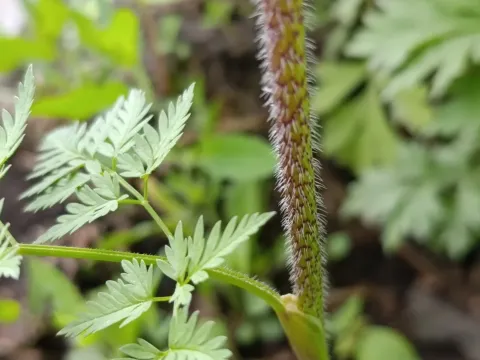
Prescott's Chervil
Chaerophyllum prescottii
Prescott's Chervil (Chaerophyllum prescottii) is a perennial or biennial herb belonging to the Apiaceae family. Sowing is generally recommended in late autumn to allow the seeds to undergo natural winter stratification, which significantly improves the germination rate in early spring.
What the section contains
Prescott's Chervil
For spring sowing, it is essential to ensure early planting as soon as the soil is workable. The seeds should be sown in rows with precise spacing to allow for adequate airflow and weed control during the initial stages of seedling development.
This crop thrives in fertile, well-drained loamy soils with a neutral pH level. It performs best in open, sunny locations where it can fully express its vegetative potential without being hindered by excessive shade or competing invasive vegetation.
The plant is highly adaptive to temperate climates, displaying notable cold resistance during the winter months. It maintains its vigor even in fluctuating weather conditions, provided that the soil structure allows for deep root penetration and proper gas exchange.
Regular maintenance of soil moisture is vital during the early stages of growth, although mature plants exhibit moderate drought tolerance. Integrated nutrient management, incorporating both organic amendments and appropriate mineral fertilization, is key to maximizing biomass yield per hectare.
The most significant pathological threats include various powdery mildew species and root rot pathogens that proliferate in damp, poorly drained soils. Managing moisture levels and selecting sites with good topographical drainage are primary strategies for preventing these diseases.
Common pests associated with Apiaceae crops, such as the carrot rust fly and various aphid species, require monitoring throughout the growing season. Implementing a robust crop rotation plan helps to break the life cycle of these pests and reduces the reliance on synthetic chemical interventions.
The optimal harvest timing for biomass production is shortly before the onset of the flowering phase. Harvesting at this stage ensures the highest concentration of crude protein and essential nutrients in the foliage, providing superior quality forage.
Mechanical harvesting equipment should be calibrated to maintain an appropriate cutting height to support plant regeneration. Post-harvest, the material must be processed promptly, either through drying or ensiling, to stabilize its nutritional value for later use.