

Reference · Crops
Dill
Anethum L.
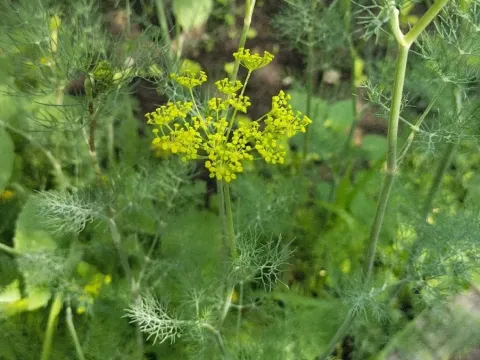
Dill (Anethum graveolens) is a hardy annual herbaceous plant belonging to the Apiaceae family. It is typically grown from seeds sown directly into the soil, with germination occurring at temperatures as low as 3–5 °C.
1
items
What the section contains
Marketplace
Products in this section · 12


Dill
For a continuous supply of fresh herbs, farmers employ a successional planting strategy, sowing new batches of seeds every two to three weeks throughout the entire growing season.
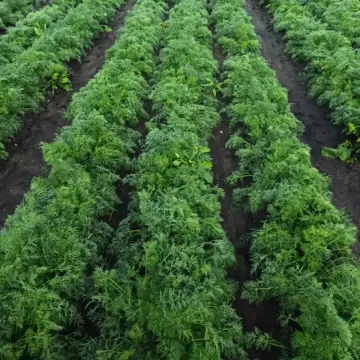
The optimal row spacing is about 15–20 cm, with seeds planted at a depth of 1–2 cm. Adequate moisture during the germination phase is critical for achieving uniform and vigorous seedling emergence.
Pre-soaking the seeds for 24–48 hours before planting can significantly accelerate germination by leaching out the essential oils that naturally inhibit the seed's growth process.
Dill can also be sown late in the autumn as a winter crop. In this case, the seeds are placed in frozen soil to prevent early germination, ensuring they are ready to sprout as soon as spring temperatures rise.
Dill thrives in full sun and requires well-drained, fertile soil rich in organic matter. A neutral to slightly acidic pH level between 6.0 and 7.0 is considered ideal for optimal nutrient uptake.
The crop is sensitive to drought. Consistent soil moisture is necessary to prevent premature bolting, as heat and water stress accelerate the transition from the vegetative to the flowering stage.
While dill can grow in various soil types, it prefers loose, sandy loams. Heavy, waterlogged soils should be avoided, as they significantly increase the risk of root rot and other fungal pathogens.
Dill performs best when following crops like cucumbers, cabbages, or tomatoes, provided these previous crops were well-fertilized, as excessive fresh manure can lead to stunted growth in dill.
The plant is remarkably resilient to cold temperatures. Once established, young dill plants can withstand light frosts, making it a reliable early-season crop for many temperate climates.
Commercial yields of fresh dill foliage typically range from 15 to 30 tons per hectare, depending on the intensity of the farming system and the specific variety chosen for production.
Early-maturing varieties can be ready for harvest within 35–45 days post-emergence, allowing for multiple crop cycles within a single growing season under optimal management conditions.
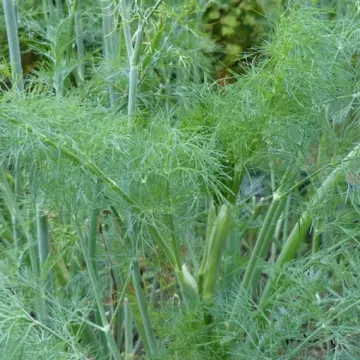
Bush-type varieties are often preferred for foliage production because they are genetically programmed to delay flowering, thus providing a longer harvest window and greater overall biomass.
Yields are maximized by providing consistent irrigation, effective weed control, and moderate nitrogen supplementation, which encourages lush, green growth without compromising plant health.
Modern hybrid seeds are increasingly used in professional settings to ensure high uniformity in plant size and shape, which is essential for mechanized harvesting and efficient post-harvest processing.
Powdery mildew is a widespread fungal disease in dill production, manifesting as a white, dusty coating on the leaves that reduces marketability and forces premature disposal of infected crops.
Dill pests include the aphid, which damages leaves through sap-feeding, and the parsley worm (the caterpillar of the black swallowtail butterfly), which can defoliate plants rapidly if left unchecked.
Root rot and damping-off disease are common in overcrowded or poorly drained fields. These issues often lead to localized patches of dead or wilted seedlings, which can expand if irrigation isn't managed.
Integrated pest management (IPM) practices, such as maintaining proper crop rotation and avoiding the planting of other Apiaceae species in proximity, are effective ways to mitigate disease spread.
Chemical control must be applied sparingly and strictly according to labels, given the short growing cycle of the crop and the strict residue standards for leafy green herbs in global markets.
Harvesting for fresh market use begins when the plants reach a height of 15–20 cm. The most common practice is to cut the stems near the base early in the day when the plants are turgid.
For culinary and spice production, the entire plant or the flower umbels are harvested at the peak of bloom, just as the seeds begin to develop but before they turn brown and mature.
Post-harvest handling is critical for maintaining quality. The foliage should be cooled immediately after harvest to stop respiration, which keeps the leaves vibrant and flavorful for longer.
Commercial dill is usually bundled in small, breathable packages to prevent moisture buildup and decay during transport, ensuring it reaches the consumer in the freshest possible state.
For industrial processing, such as drying or extraction of essential oils, harvest timing is adjusted to capture the maximum concentration of flavor compounds, often coinciding with full seed maturity.