
Poison hemlock
Conium
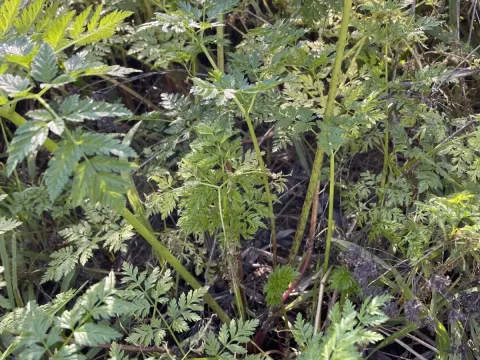
Poison hemlock (Conium maculatum) is a biennial herbaceous plant belonging to the Apiaceae family. In its first year, it develops a rosette of leaves, and in the second year, it produces a tall, branched stem characterized by distinct purple spots.
What the section contains

Poison hemlock
Sowing is typically conducted in the autumn or early spring. The seeds require a period of cold stratification for optimal germination, making autumn sowing a highly effective method for field production.
Seeds are planted at a depth of approximately 1.5 to 2 cm. In commercial cultivation, row spacing should be maintained at 50–60 cm to allow for sufficient vegetative growth and to facilitate manual or mechanical maintenance.
The plant is highly invasive and capable of rapid self-seeding, which necessitates strict monitoring and containment measures to prevent it from spreading beyond the cultivated plot.
Due to the high toxicity of the entire plant, cultivation areas must be clearly marked and isolated from livestock grazing areas or forage crop production zones to ensure agricultural safety.
Poison hemlock thrives in fertile, moist, and well-drained soils. It is commonly found in disturbed sites, such as roadsides, field margins, and waste grounds, indicating a high tolerance for varied soil conditions.
The species is well-adapted to temperate climates and demonstrates resilience against both cold winter temperatures and summer moisture stress, making it an undemanding crop to maintain.
While it can tolerate partial shade, the plant performs best in full sunlight, which promotes vigorous stem development and increases the concentration of active alkaloids in the foliage.
Soil pH preference is generally neutral to slightly alkaline. Adequate soil moisture is essential during the early growth stages, but the plant is sensitive to waterlogging during dormant periods.
No specific fertilizers are strictly required, though balanced nitrogen application can enhance biomass production, which is a key factor for those harvesting for pharmaceutical applications.
Like many plants in the Apiaceae family, poison hemlock can be susceptible to fungal diseases such as powdery mildew, especially in environments with poor air circulation and high humidity.
Pests such as aphids and various larvae of the umbelliferous moth can infest the plants, causing structural damage and potentially reducing the yield of active chemical components.
Integrated pest management, including the removal of infected plants and the use of approved insecticides, may be necessary in large-scale operations to prevent significant crop loss.
Preventive measures include maintaining adequate spacing to promote airflow, which naturally reduces the risk of fungal proliferation within the crop rows.
Weed management within the crop is vital, as competing vegetation can stress the plants and potentially facilitate the spread of local pests and diseases to the hemlock crop.
Harvesting for medicinal purposes occurs during the second year of growth. The foliage should be gathered at the onset of the flowering stage, when the alkaloid content is highest.
Seeds are harvested when they reach the wax-maturity stage. Timely collection is crucial to prevent premature seed shedding, which occurs easily once the seeds start to dry out naturally.
Operators must wear personal protective equipment, including gloves and respirators, at all times during harvest to avoid systemic absorption of toxic alkaloids through the skin or inhalation.
Drying is performed in climate-controlled facilities at temperatures not exceeding 45 degrees Celsius to maintain the chemical integrity of the plant's volatile compounds.
The finished product is sorted, cleaned of debris, and stored in sealed, labeled containers, as it is classified as a hazardous raw material requiring specific handling protocols.