
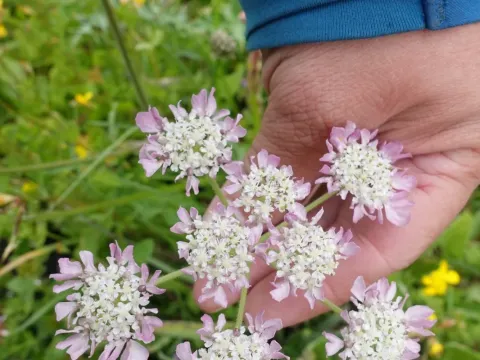
Pink hogweed
Heracleum roseum
Pink hogweed (Heracleum roseum) is a perennial herbaceous plant belonging to the Apiaceae family. Successful cultivation begins with the selection of high-quality seeds, which often require a period of cold stratification to overcome dormancy and ensure uniform germination in the field.
What the section contains
Pink hogweed
The optimal sowing time is during the mid-to-late spring, once the soil temperature consistently reaches 8–10 degrees Celsius. Seeds should be planted at a depth of 2–3 centimeters, allowing for efficient use of soil moisture while ensuring proper aeration for the developing embryo.
For commercial production, a row spacing of 60–70 centimeters is recommended. This spacing provides ample room for the plant's robust root system to expand and ensures sufficient airflow between plants, which is critical for minimizing humidity-related fungal issues.
During the first year, the crop focuses on establishing a strong vegetative foundation, characterized by the development of a large basal leaf rosette. This initial growth phase is essential for storing the nutrients required for vigorous stem growth in subsequent years.
Plant density management is crucial for maintaining yield stability. By strictly controlling the distance between plants, farmers can optimize resource competition and ensure that each plant reaches its full potential biomass production over the course of the growing season.
This crop thrives in fertile, well-draining loam soils that are rich in organic matter. While it is adaptable to various soil types, it performs best in neutral to slightly acidic pH conditions, which facilitate optimal nutrient uptake from the soil matrix.
Pink hogweed is sensitive to light availability and requires open, sunny locations to achieve its maximum biomass potential. Reduced light exposure can lead to poor development of the foliage and an overall decrease in the nutritional quality of the harvested biomass.
Adaptability to climate is a notable trait, as the plant is well-suited to regions with cold winters and temperate summers. It possesses inherent frost resistance, allowing it to remain dormant throughout the winter and resume growth quickly when spring temperatures rise.
Water management is a key agronomical consideration, particularly during the peak vegetative phase. Consistent soil moisture is necessary to support the rapid development of large leaf structures; prolonged drought periods may cause stress and diminish feed value.
Nutrient supplementation, specifically nitrogen application, can significantly boost foliage production. However, it is essential to balance fertilizers to prevent excessive stem elongation, which can reduce the nutritional density of the leaves and stems.
The yield of pink hogweed is highly dependent on effective crop management and soil health. In well-maintained stands, the crop can provide multiple years of consistent production, making it a reliable source of green mass for various agricultural applications.
Harvesting timing is critical; for the best nutritional results, the crop should be harvested prior to the onset of the flowering stage. At this point, the plant contains the highest concentrations of protein and essential nutrients for animal feed.
Production efficiency can be maximized through the use of mechanization during harvest. Cutting the foliage at the appropriate height ensures that the crown remains intact, allowing for vigorous regrowth if multiple cuts are planned throughout the season.
To maintain peak production levels, stand renewal should be considered every 5–7 years. This practice prevents soil exhaustion and ensures that the plant population remains youthful and highly productive throughout the farm's lifecycle.
Utilization of the crop is primarily focused on silage and haylage production. When correctly processed, the biomass serves as a nutritious component in livestock diets, offering a good balance of fiber and essential minerals for animal health.
Fungal pathogens, particularly powdery mildew, represent a significant risk to crop health under conditions of high humidity or poor field drainage. Proactive field management and thinning can reduce the likelihood of severe outbreaks.
Pests, such as specific umbellifer-feeding insects, can damage the growth points and floral structures if left unchecked. Integrated pest management (IPM) strategies, including biological controls, are highly recommended to protect the crop without relying solely on chemicals.
Root rot remains a concern in poorly drained fields where standing water creates an anaerobic environment. Improving field drainage is the most effective preventative measure against these types of soil-borne diseases that can lead to significant plant loss.
Maintaining a strict crop rotation schedule is vital to prevent the build-up of specific pathogens and pests in the soil. Avoiding the cultivation of pink hogweed immediately after other Apiaceae crops minimizes the risk of cross-infection and ecological stress.
If chemical interventions become necessary, it is imperative to adhere to strict pre-harvest intervals. This ensures that the forage remains safe for animal consumption and that residues do not interfere with the biological balance of the farm ecosystem.