
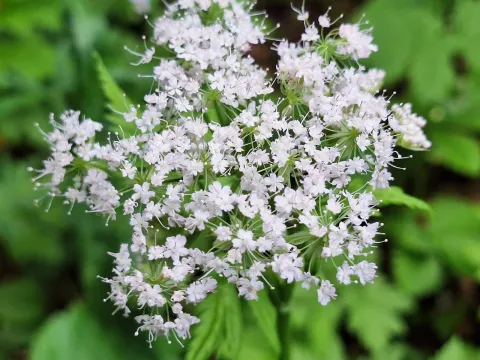
Hairy chervil
Chaerophyllum hirsutum
Hairy chervil is a perennial plant, requiring a well-planned sowing strategy to ensure long-term productivity. The optimal time for planting is early spring when soil moisture is sufficient for germination, or in late autumn for winter-stratified seeds that emerge vigorously as temperatures rise.
What the section contains
Hairy chervil
Preparation of the seedbed is critical, as it involves removing perennial weeds that compete with the developing seedlings. Seeds should be sown in rows with a spacing of approximately 30 to 40 centimeters, allowing adequate space for the basal rosette to develop during the first growth year.
The sowing depth must be kept shallow, no more than two centimeters, as the seeds have limited energy reserves for deep emergence. A light rolling of the soil after sowing ensures good seed-to-soil contact, which is vital for achieving high germination rates across the entire field.
During the first year, focusing on weed control in the inter-row spaces is essential for the crop's establishment. Regular mechanical cultivation helps break up the soil surface, improves aeration, and encourages the development of a strong root system that can support multiple harvests.
Once the crop reaches full density, it naturally competes better with other vegetation. This reduces the need for extensive weeding in subsequent seasons and allows the farmer to focus on nutrient management and harvesting, ensuring a stable and productive forage stand.
As a member of the Apiaceae family, Hairy chervil thrives in moderately moist, semi-shaded environments, reflecting its origins in mountain and forest landscapes. It is sensitive to excessive heat and direct sunlight, which can stunt its growth and decrease overall biomass quality.
The ideal soil conditions include fertile, well-drained loams rich in organic matter. While the plant prefers a neutral pH, it is adaptable to slightly acidic soils. Proper drainage is paramount, as waterlogged conditions quickly lead to root rot and significant stand loss.
Hairy chervil demonstrates impressive cold hardiness, making it suitable for regions with harsh winter climates. The plant remains dormant through the winter and initiates rapid regrowth as soon as spring temperatures stabilize, provided the soil moisture levels are adequate.
Effective moisture management is a key requirement for successful cultivation. During hot summer periods, irrigation may be necessary to prevent premature bolting and lignification of the stems, which can negatively impact the palatability of the forage for livestock.
To maintain high productivity, the soil should be kept loose and well-structured. Using mulching techniques or maintaining a dense leaf canopy helps regulate soil temperature and conserve moisture, creating an optimal microclimate for the plant to thrive throughout the growing season.
The yield potential of Hairy chervil is highly dependent on effective agronomic management and consistent moisture availability. In optimal conditions, the crop can provide multiple harvests throughout the season, starting from the second year of growth after full establishment.
The green mass is valued for its nutritional quality, containing proteins and minerals beneficial to livestock. The plant shows high regeneration capacity after mowing, allowing it to produce high-quality aftermath that is often ideal for fresh feeding or silage production.
Seed production is an important secondary use, though it requires specific attention to the uneven maturation of the umbels. Careful timing of harvesting is necessary to minimize seed shatter, which is a common challenge when collecting the seeds of many Apiaceae species.
Applying balanced fertilizers, particularly those rich in nitrogen and phosphorus, can significantly boost total biomass yield. These nutrients support rapid vegetative regrowth after mowing, allowing farmers to maximize their forage production from a single plot over several years.
Farmers should expect a decline in yield after approximately five years of continuous cultivation, indicating the need for crop rotation. Transitioning to a different crop helps restore soil fertility and breaks the cycle of specialized pests that may have built up in the soil.
Powdery mildew and various leaf spot diseases are the primary threats to Hairy chervil, especially in high-humidity or poorly ventilated conditions. These fungal pathogens can quickly degrade leaf quality, making the forage unsuitable for animal consumption.
Pests such as aphids and carrot-related moths can cause significant damage to the plant by feeding on tender foliage and sap. Proactive monitoring and the use of biological control agents are recommended to minimize damage while maintaining the safety of the forage for livestock.
Adhering to proper crop rotation is the most effective preventative strategy against soil-borne diseases. By not planting Hairy chervil after other members of the Apiaceae family, farmers can effectively reduce the pathogen pressure in the soil and improve plant health.
Mechanical damage during inter-row cultivation often acts as an entry point for pathogens. Ensuring that equipment is well-maintained and used with precision helps preserve the integrity of the root crown, keeping the plants robust and resistant to minor infections.
When chemical intervention is required, choosing products with short pre-harvest intervals is essential. However, the focus should remain on integrated pest management (IPM) practices, which prioritize natural defenses and long-term ecosystem health over synthetic pesticides.
Harvesting should ideally occur at the onset of the budding phase to ensure the best balance of protein and sugar content. Using sharp mower blades is necessary to ensure a clean cut, which promotes faster recovery and reduces the risk of disease entry at the cut site.
Speed is essential once the material is mown to prevent excessive drying or spoilage in the field. Ideally, the harvested green mass should be utilized immediately or ensiled to lock in the nutrients and maintain its high feeding value throughout the year.
When drying for hay, ensuring adequate airflow through the swaths is critical, as the thick stems require longer to dehydrate than finer grasses. Proper management here prevents molding within stored bales, which could otherwise pose health risks to livestock.
For seed collection, the umbels are harvested once they reach a greyish-brown color. They should be dried in a well-ventilated, shaded area to prevent heating and fungal spoilage, then threshed and cleaned to remove debris and achieve high-quality seed lots.
The end-of-season field cleanup is a crucial step in maintaining the health of the stand. Removing plant residues reduces the overwintering capacity of pests and pathogens, setting the stage for a healthy, vigorous start to the following growing season.