
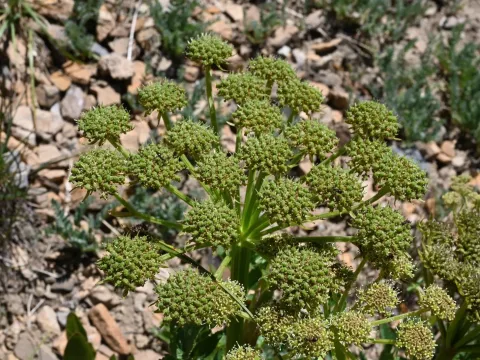
Gray's Angelica
Angelica grayi
Gray's Angelica (Angelica grayi) is a plant of alpine regions, and its sowing process is strictly dependent on mimicking natural cooling cycles.
What the section contains
Gray's Angelica
For successful germination, seeds should be sown in the autumn or undergo cold stratification in a refrigerator for at least two to three months.
The seeds are small and require surface sowing or a very shallow covering of soil to ensure sufficient light exposure for dormancy breaking.
The germination period can be extended and irregular, necessitating the maintenance of consistent soil moisture throughout the entire process.
Using a sterile, well-draining seed-starting mix is essential to prevent fungal damping-off, which is a common issue for this species.
Belonging to the Apiaceae family, this species naturally thrives in cool, moist, and high-altitude habitats of the Rocky Mountains.
The plant demands humus-rich, loose soil with excellent drainage to prevent root issues; it cannot tolerate stagnant water or heavy clay soils.
It prefers cool summers and is highly sensitive to heat stress, making it better suited for mountainous or northern climates with humid air.
Partial shade is often required in lower elevations to protect the foliage from intense afternoon sun, which can scorch the plant leaves.
Consistent irrigation is necessary to ensure the soil remains cool and moist, as the plant does not cope well with periods of drought.
Root rot remains the most significant threat, especially when environmental conditions do not allow for adequate airflow and moisture balance.
Aphids are the primary pests that tend to congregate on the succulent stems and flower buds, weakening the plant by extracting sap.
Powdery mildew can become an issue if humidity is too high in stagnant air conditions, requiring improved spacing between individual plants.
Occasionally, leaf-chewing insects can damage the ornamental foliage, though this is usually secondary to environmental stress factors.
Integrated pest management should be employed, focusing on cultural practices such as weeding and proper plant spacing rather than heavy chemical use.