
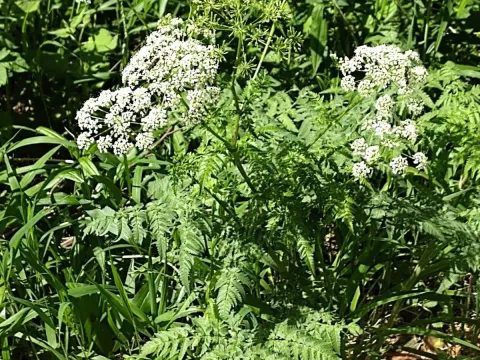
Golden chervil
Chaerophyllum aureum
Golden chervil (Latin: Chaerophyllum aureum) is a perennial herbaceous plant belonging to the Apiaceae family. Native to the mountainous regions of Europe, this plant has adapted to cooler, moist climates and is typically found in partially shaded habitats with nutrient-rich soils.
What the section contains
Golden chervil
The plant features a robust root system and a straight stem that can reach significant heights. Its foliage consists of finely divided, fern-like leaves, and the characteristic yellow-tinted umbels provide the species with its descriptive name, making it distinct from other members of the genus.
For successful agricultural cultivation, the crop requires deep, loamy, and well-draining soils. It thrives in environments where soil moisture remains consistent throughout the growing season, yet it is intolerant of waterlogged conditions that can lead to root system decay.
Climate requirements for this plant focus on moderate temperatures and protection from harsh, direct sunlight. As a hardy perennial, it demonstrates excellent winter resilience, allowing it to persist through variable temperate climates while maintaining its viability for subsequent seasons.
Economically, golden chervil is utilized primarily for its forage potential and its secondary applications in traditional herbal studies. Its management requires careful attention to early-stage development to ensure strong establishment and optimal biomass production for end-use purposes.
The primary threats to golden chervil crops are fungal infections that thrive in high-humidity microclimates. Common issues include powdery mildew and various leaf spot pathogens, which can severely impact both the quality and total yield of the foliage if left unmanaged.
Insect pests specific to the Apiaceae family, such as the parsnip moth or various aphid species, pose a consistent risk. These pests damage the plant by feeding on its floral structures and tender leaves, which weakens the plant and stunts its overall growth rate.
Effective management strategies emphasize crop rotation and the strategic use of field maintenance to reduce pest habitats. By ensuring proper spacing between plants, growers can enhance airflow and reduce the humidity levels that favor the spread of fungal spores.
Integrated pest management protocols should be implemented to balance the need for crop protection with environmental safety. Regular monitoring of the field helps identify early infestation signs, allowing for precise and efficient intervention before widespread damage occurs.
Providing adequate nutrient support is also a vital defense mechanism, as healthy plants are naturally more resistant to stress. A balanced fertilization program, tailored to the specific needs of the crop, significantly bolsters its ability to recover from biotic and abiotic pressures.