
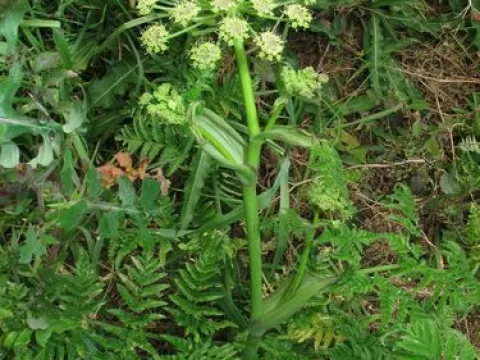
Greater angelica
Angelica major
Sowing seeds of Angelica major is most successful when done in late autumn, as the seeds require a period of natural cold stratification to break dormancy. For spring planting, it is necessary to artificially stratify the seeds in a moist substrate at 0-5 degrees Celsius for at least 6 weeks before sowing.
What the section contains
Greater angelica
The seeds should be sown at a depth of 1-2 centimeters in well-prepared, loose soil. Given the plant's size, rows should be spaced at least 70-80 centimeters apart to ensure each plant has enough space to develop its large basal leaves and robust root system.
As a member of the Apiaceae family, the greater angelica thrives in fertile, loamy, and moisture-retentive soils with high organic matter content. Proper drainage is essential, as the roots are highly susceptible to rot if they sit in waterlogged conditions for extended periods.
This species prefers locations with partial shade, mimicking its natural habitat along stream banks and forest edges. While it can tolerate some sun, excessive heat and direct light often lead to leaf wilting and reduced quality of the herbal material produced by the plant.
The crop is highly cold-hardy, making it suitable for temperate regions. The plant requires consistent moisture throughout the growing season, so supplemental irrigation is recommended during dry spells to ensure steady growth and proper root development during the first year.
Disease management is critical, with fungal pathogens like gray mold being the most common threats under humid conditions. Maintaining adequate spacing and promoting good airflow between plants is the primary strategy to prevent the rapid spread of infections.
Pest management focuses on controlling aphids and the larvae of the parsnip webworm or related insects that feed on developing flowers. Early detection through regular field scouting allows for timely and targeted intervention, minimizing the need for extensive pesticide use.
The main harvest typically involves the roots, which are collected at the end of the second year of growth when the plant’s energy stores are at their peak. The roots are harvested in autumn, thoroughly cleaned, sliced, and dried in a well-ventilated space at a controlled temperature to retain essential oils.