
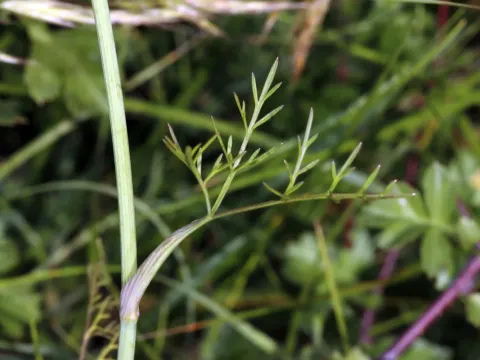
Carum elegans
Carum elegans
Carum elegans is a perennial plant that requires specific sowing timing based on the climatic region. Typically, seeds are sown in late autumn or early spring when the soil reaches its physical maturity, allowing the seeds to undergo natural stratification.
What the section contains
Carum elegans
The seeds have a slow germination rate, so maintaining adequate soil moisture is critical during the initial establishment phase. Sowing depth should be kept shallow, approximately 1.5 to 2 cm, to ensure successful seedling emergence.
Commercial production often utilizes row planting or wide-row spacing (up to 45 cm) to facilitate mechanical maintenance and weed control. This spacing also allows for better aeration around the developing plant base.
Thinning is necessary once the seedlings are established to maintain an optimal distance of 10-15 cm between plants. Proper plant density is essential for the healthy development of the leafy rosette, which is vital for the crop's long-term survival.
During the first year, the crop focuses on root and vegetative development. Consequently, agricultural efforts should be directed towards maintaining a consistent moisture level and keeping the plots free from aggressive weeds.
As a member of the Apiaceae family, Carum elegans thrives in fertile, well-draining loamy soils with a neutral or slightly acidic pH. Heavy, waterlogged soils must be avoided to prevent root rot and physiological stress.
The plant is light-demanding and performs best in open, sunny locations. Insufficient sunlight exposure significantly reduces the concentration of essential oils in the seeds and stunts the overall growth of the plant.
Carum elegans exhibits strong winter hardiness, allowing it to grow in temperate climates. However, extreme spring temperature fluctuations can occasionally affect the early re-growth phase, necessitating protective measures if possible.
Water requirements are highest during the flowering and seed-setting stages. Consistent hydration is essential for grain filling, though the soil structure must prevent water stagnation to protect the root health.
Crop rotation is vital for this species. It should not be grown consecutively after other Apiaceae crops to prevent the buildup of soil-borne pathogens and pests common to the family. Cereal crops are excellent preceding choices.
The yield of Carum elegans typically peaks during the second and third years of the plantation. Under optimal conditions, producers can expect a yield ranging from 8 to 12 centners per hectare.
Balanced mineral nutrition, particularly the availability of phosphorus and potassium, plays a key role in reproductive development. Controlled nitrogen application is recommended to avoid excessive vegetative growth at the expense of seed production.
Pollination by insects, especially honeybees, is essential for high yields. Providing hives near the fields during the flowering period significantly increases the fertilization rate and final seed set.
Weed management is a crucial factor in maintaining high yield potential. Competition from weeds during the early growing stages can severely impact the vigor and uniformity of the crop.
With proper adherence to agronomic standards, such as timely fertilization and pest control, a single plantation can remain productive for multiple years, providing consistent annual harvests.
Common diseases affecting Carum elegans include septoria leaf spot and powdery mildew, which thrive in humid conditions. These fungi damage the leaf surface and reduce the plant's photosynthetic capacity.
Pests, particularly the umbellifer moth and caraway moth, can cause substantial damage to the flower heads. Their larvae feed on the buds, which directly reduces the quality and quantity of the seed harvest.
Root rot is a persistent threat in waterlogged fields or in cases of poor drainage. Prevention focuses on soil structure management and selecting fields with high natural drainage capabilities.
Chemical protection methods should be applied cautiously, especially during flowering, to protect beneficial insects. Biological control agents and integrated pest management (IPM) strategies are increasingly favored.
Regular monitoring of the plots allows for early detection of pest or disease outbreaks. Quick intervention, such as localized treatment or cultural adjustments, is the most effective way to prevent widespread crop loss.
Harvesting is typically performed when the seeds reach full maturity and display a characteristic brown color. Timing is critical to prevent losses from natural seed shattering, which is common in many Apiaceae species.
A two-stage harvesting process is widely considered the best practice. The plants are first mowed into windrows to finish drying before the threshing stage, which ensures higher seed quality.
In large-scale operations, direct combining can be used when seed moisture levels are optimal (around 15-18%). Precision settings on the harvester's drum and cleaning system are required to prevent seed damage.
Post-harvest handling requires immediate drying in well-ventilated areas to prevent overheating and the degradation of aromatic essential oils. The material must be cleaned of debris to improve storage stability.
Proper storage involves keeping the seeds in a dry, cool, and well-ventilated facility. Maintaining a temperature below 20°C ensures that the seeds retain their viability and aromatic quality until processing.