
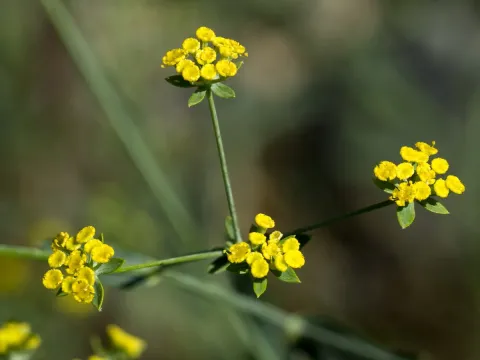
Bupleurum kakiskalae
Bupleurum kakiskalae
Bupleurum kakiskalae is a perennial herbaceous plant belonging to the Apiaceae family. It is a rare endemic species native to the island of Crete, where it thrives in specific rocky limestone habitats.
What the section contains
Bupleurum kakiskalae
The plant requires well-drained, nutrient-poor, stony soils to flourish. In agricultural settings, it is essential to mimic these conditions to avoid root rot and ensure the plant's health, as it is highly sensitive to moisture accumulation.
Regarding climatic needs, this species prefers high exposure to sunlight and temperatures typical of the Mediterranean region. It is well-adapted to withstand hot, dry summers, which are a characteristic feature of its native landscape.
Botanically, it features a strong taproot and unique leaf structure designed for efficient water management. Growth is generally slow, emphasizing the need for patience and careful site selection when introducing it to a controlled environment.
The economic value of this plant lies primarily in its potential pharmaceutical applications. Like other members of the Bupleurum genus, it may contain specific secondary metabolites, such as triterpenoid saponins, with therapeutic properties.
The primary threats to this plant include environmental degradation and improper drainage leading to fungal pathogens. When cultivated, it is susceptible to typical pests associated with the Apiaceae family, such as aphids and specialized coleoptera.
Effective management involves consistent monitoring for early signs of disease and ensuring the growing medium maintains excellent aeration. Given its status as a rare plant, habitat preservation remains the most critical factor for its survival.