
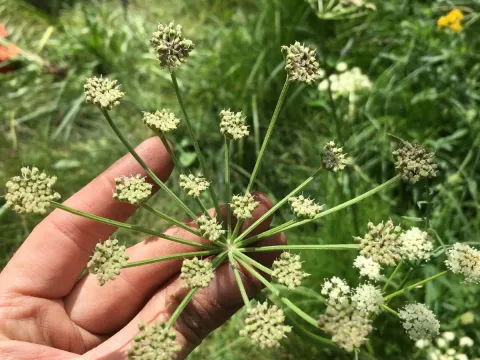
King's Angelica
Angelica kingii
King's Angelica (Angelica kingii) is a robust perennial herb belonging to the Apiaceae family. It is native to the western regions of North America, where it thrives in high-altitude meadows and along stream banks.
What the section contains
King's Angelica
The plant is characterized by its large, compound leaves and hollow, striated stems that can reach substantial heights. Its root system is deep and fleshy, evolved to store energy in the nutrient-poor, rocky soils often found in its native habitat.
Cultivation of Angelica kingii requires well-draining soil with a neutral to slightly acidic pH level. It performs best in cool-temperate climates where it can receive full sun, although it tolerates partial shade in warmer environments.
Water management is critical during the initial growing stages. The soil should remain consistently moist but not waterlogged, as poor drainage is the most common cause of failure in agricultural settings for this species.
In terms of agricultural utility, King's Angelica is primarily valued for its ethnobotanical history. Modern growers emphasize the need for adequate spacing to ensure good air circulation, which helps maintain the overall health of the crop.
The species is susceptible to various fungal pathogens, specifically those that thrive in damp conditions such as root rot and powdery mildew. Prevention is centered on maintaining proper soil aeration and avoiding overhead irrigation.
Common insect pests include aphids, which tend to infest the umbels during the flowering stage, and leaf-mining insects that can compromise the photosynthetic capacity of the foliage.
Integrated pest management strategies are recommended, focusing on physical barriers for small plots and targeted biological control agents for larger commercial setups. Regular scouting is essential for early detection.
Poor drainage is the primary abiotic stressor that leads to increased susceptibility to secondary infections. Ensuring that the site has optimal water outflow can significantly reduce the need for chemical interventions.
Sanitation practices, such as removing dead plant debris at the end of the season, are crucial for disrupting the life cycles of pathogens and preventing overwintering of harmful pests within the planting area.