
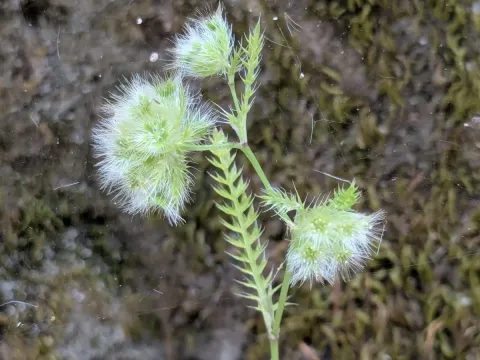
Lagoecia
Lagoecia
Sowing of Lagoecia is carried out primarily in the spring, once the soil has warmed up to a temperature of 12–15 degrees Celsius. To ensure uniform germination, seeds should be sown at a depth of no more than 1–2 centimeters, due to their small size.
What the section contains

Lagoecia
An important step is the preparation of the seedbed; the soil must be thoroughly loosened and cleared of weeds, as the crop is extremely sensitive to competition during the early stages of development.
The sowing pattern depends on the goals of cultivation, but the classic method is a row-based approach with spacings of 30–40 centimeters. This provides enough space for root system development and subsequent maintenance.
The seeds germinate relatively slowly, so it is important to maintain stable soil moisture in the top layer during the first three weeks after sowing. If necessary, temporary covers such as agro-textiles can be used to accelerate the process.
After the appearance of two true leaves, thinning should be performed, leaving a distance of about 15–20 centimeters between plants to ensure full vegetative growth and prevent over-crowding.
Lagoecia is a typical member of the Apiaceae family, native to the Mediterranean region. It prefers well-lit areas, as it is a light-loving plant.
The crop has moderate soil requirements, but it shows the best results in light sandy loam or loamy soils with a neutral or slightly alkaline pH level.
The plant has good drought tolerance; however, to obtain high-quality green mass and seeds, it requires periodic watering during the active growth and flowering phases.
The optimal temperature range for Lagoecia development is 20–25 degrees Celsius. Sudden temperature fluctuations and excessive soil moisture can lead to the development of root rots.
The crop does not tolerate waterlogging, so areas with a high water table are strictly unsuitable for its cultivation without an organized drainage system.
Like many other members of the Apiaceae family, Lagoecia is susceptible to powdery mildew, especially in conditions of high air humidity and poor wind circulation.
Among pests, aphids and spider mites pose the greatest danger, as they suck juices from young leaves and inflorescences, which can significantly reduce seed yield.
For pest control, it is recommended to use organic preparations or infusions based on insecticidal herbs, avoiding aggressive chemicals if the produce is intended for food or medicinal purposes.
In case of fungal infections, it is necessary to thin out the plantings to improve ventilation and remove severely damaged specimens for proper disposal.
Disease prevention consists of maintaining crop rotation and returning the culture to the same plot no earlier than after 3–4 years to avoid the accumulation of specific soil pathogens.
Harvesting of Lagoecia is conducted depending on which part of the plant holds economic value. Most often, the inflorescences or seeds are harvested during the period of full maturity.
A sign of readiness for seed harvest is the change in the color of the umbels from green to a brownish-gray shade. It is important to avoid over-ripening, as this risks spontaneous shedding of the fruits.
The harvest is carried out in dry, sunny weather during the morning hours, after the dew has evaporated but before the heat of the day reaches its peak, allowing the loss of essential oils to be minimized.
Cut inflorescences should be dried in the shade under a well-ventilated shelter, spreading them in a thin layer on paper or mesh trays to prevent overheating and degradation of the raw material.
After drying, the seeds are cleaned of impurities and stored in a dry, dark, and cool place, using airtight containers to preserve their aromatic and biologically active properties.