
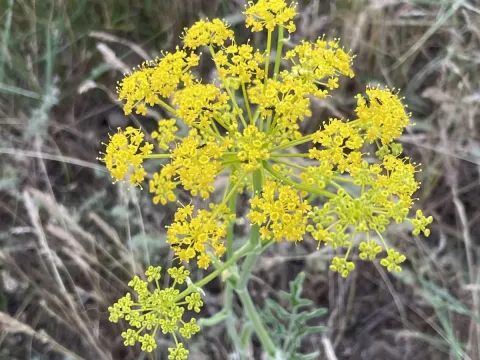
Klaus's parsnip
Pastinaca clausii
Klaus's parsnip is a biennial crop that requires a long growing season to develop high-quality roots. Seeds are usually sown directly into open ground in early spring, once soil temperatures reach 5–7 degrees Celsius.
What the section contains
Klaus's parsnip
Seeds of this variety have slow germination rates due to high essential oil content, so pre-soaking is often recommended. Optimal sowing depth is 2–3 centimeters to ensure good contact with moist soil for proper imbibition.
Late autumn sowing allows seeds to undergo natural stratification, leading to earlier and more uniform emergence in the following season. It is important to avoid overcrowding to give each plant sufficient space for root development.
Row spacing should be at least 40–50 centimeters for easy maintenance and weeding. Once plants reach the two-to-three leaf stage, thinning is required to maintain an interval of approximately 15–20 centimeters between plants.
The crop is highly resistant to low temperatures during the early stages of growth. However, to obtain a quality yield, it is crucial to adhere to sowing dates so the plant can fully develop its root system before the summer heat.
Klaus's parsnip belongs to the Apiaceae family and has specific soil structure and fertility requirements. The crop thrives in deep, loose loamy or sandy soils with a neutral pH level.
The plant is extremely sensitive to soil compaction, which often leads to deformed or branched roots. A sunny location is necessary as parsnip is a sun-loving plant that does not tolerate shading well.
Moisture availability is a critical factor for growth, especially during seed germination and the peak root development period. However, the crop does not tolerate waterlogging, which can easily trigger root rot.
For successful cultivation, it is advised to avoid applying fresh manure directly to the crop, as this encourages lush top growth at the expense of root development. Organic fertilizers should ideally be applied the previous autumn.
The optimal temperature range for development is between 16 and 22 degrees. Excessive heat combined with water deficit will slow growth significantly and may negatively affect the flavor profile of the roots.
The yield of Klaus's parsnip depends directly on the adherence to agricultural practices and soil fertility. On average, with proper technology, one can expect between 3 to 5 kilograms of root vegetables per square meter.
The main factors limiting yield potential include micronutrient deficiency and competition from weeds. Parsnips grow slowly in the first month, making weed control during this period essential for the final weight of the roots.
Regular irrigation and timely potassium fertilization promote intensive root filling in the second half of the growing season. Well-developed roots can reach a weight of 200 to 400 grams under favorable conditions.
Yield is also dependent on seed quality and plant density. Overcrowding leads to small, non-marketable roots, while properly spaced plantings allow for large specimens suitable for long-term storage.
With correct management, this crop shows stable yield performance, outperforming many other root vegetables in density and dry matter content. It is important to remember that roots continue to grow until the first hard frosts.
Klaus's parsnip is susceptible to several diseases common to the Apiaceae family, with white and gray rot being the most dangerous. These pathogens thrive in high humidity and poorly ventilated environments.
Cercospora leaf spot and powdery mildew can infect the foliage, leading to premature drying of the leaves and reduced nutrient flow to the root. Prevention involves crop rotation and removing plant debris.
Regarding pests, the carrot fly causes the most damage, as its larvae feed on the roots, making them unsuitable for storage. Control requires an integrated approach, including protective nets or insecticide use.
Wireworms and white grubs can also cause significant damage by boring tunnels into the roots. These wounds serve as entry points for secondary infections that cause the vegetable to rot while still in the ground.
Key control measures include:
- Strict adherence to crop rotation, returning to the same site no sooner than 3–4 years.
- Preventive fungicide applications during high-risk infection periods.
- Frequent soil cultivation to disrupt pest pathways.
- Use of certified healthy seed material and pre-sowing seed treatment.
Harvesting Klaus's parsnip takes place in autumn when the roots reach physiological maturity. The ideal time is during dry, cool weather before the onset of persistent frosts, which helps improve storage quality.
Roots are extracted from the soil using forks or specialized equipment, taking care not to bruise or cut the skin. Any mechanical damage significantly shortens storage life as pathogens can easily enter through wounds.
After lifting, the foliage is trimmed at the top of the root crown, leaving a short stub. It is important to remove soil, but washing should be avoided if planning for long-term storage in a cellar or basement.
Before storing for winter, the harvest should be air-dried in a sheltered area away from direct sunlight for a few days. This helps to heal minor wounds and reduces moisture loss during the storage period.
Klaus's parsnip is known for its excellent shelf life when stored in sand or cool rooms with high humidity. When stored properly, roots retain their juiciness and nutritional properties until the next season.