
Kundmannia
Kundmannia
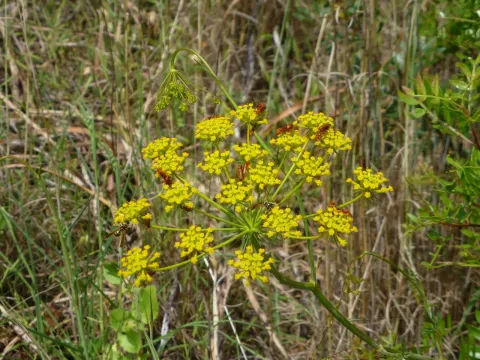
Kundmannia is a genus of perennial herbaceous plants belonging to the Apiaceae family. This botanical group is well-known for its adaptation to rugged, open landscapes typical of Mediterranean environments where it grows naturally.
What the section contains

Kundmannia
The cultivation requirements focus heavily on soil structure. To ensure successful development, the plant must be provided with well-draining, loose soils, which prevent the root system from developing rot, a common issue in heavier clay-based grounds.
Regarding climate, the plant exhibits remarkable drought resistance. It thrives in high-sunlight conditions, making it suitable for regions with prolonged dry seasons and high temperatures, provided that soil moisture is not depleted entirely.
Agro-technical management for this crop involves maintaining appropriate soil pH levels, ideally within the neutral to slightly alkaline range. Proper site selection is crucial to ensure that the plant receives adequate exposure to sunlight throughout the day.
In terms of botanical anatomy, the plant features complex inflorescences typical of the parsley family. Its deep taproot is an essential adaptation feature, allowing the plant to reach deep groundwater and maintain structural integrity in nutrient-poor, rocky substrates.