
Pachycormus discolor
Pachycormus discolor
Description
Growing requirements
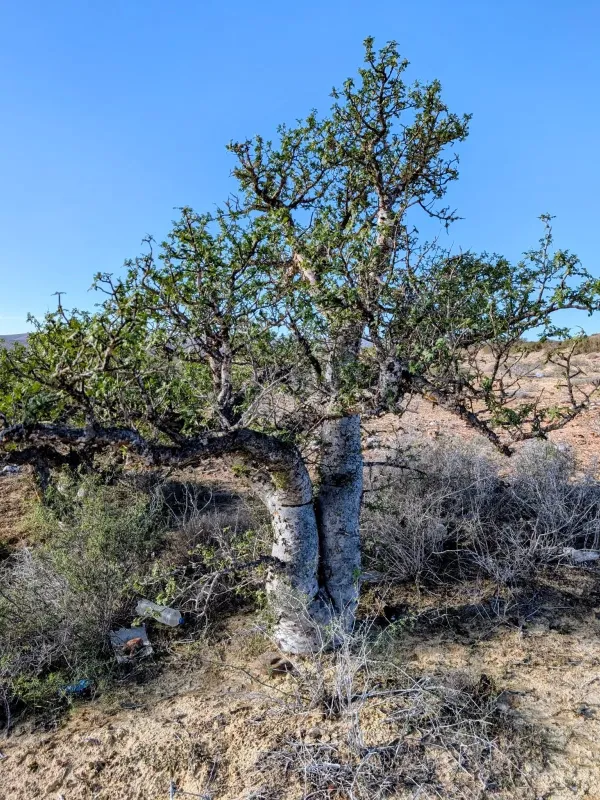
Pachycormus discolor, commonly known as the Elephant Tree, belongs to the Anacardiaceae family. It is a rare succulent endemic to the arid landscapes of Baja California, Mexico, where it survives in extreme drought conditions.
The plant is biologically characterized by its thick, water-storing trunk and an ability to drop leaves during prolonged dry periods to conserve energy. Its morphology is highly adapted to intense heat and desert sunlight.
For successful cultivation, this species requires a location with maximum sunlight exposure and excellent air circulation. It thrives in environments where day temperatures remain high, as it is extremely sensitive to cold.
The planting substrate must be composed of inorganic, coarse-textured materials such as gravel, pumice, or sand. High drainage capacity is non-negotiable, as any moisture accumulation in the root zone will lead to rapid decay.
Economically, Pachycormus discolor is valued in ornamental horticulture and specialized xeriscaping. It is highly sought after by succulent collectors for its sculptural form and slow-growing, architectural beauty.
Main diseases and pests
Root and stem rot caused by overwatering or poor drainage is the primary killer of this species. Maintaining a completely dry soil state during the winter dormancy period is essential to prevent fungal infections.
Pests such as mealybugs and spider mites represent significant threats in controlled environments. These pests frequently hide in the deep crevices of the bark, making manual eradication difficult.
Insufficient light intensity leads to etiolation, a condition where the plant stretches and weakens structurally. While not a disease itself, it renders the plant susceptible to secondary pathogens and physical damage.
Fungal infections can also be introduced through improper pruning or accidental cuts on the trunk. It is strictly advised to use sterilized tools and apply antifungal powders to any fresh wounds on the succulent.
Pest management programs should emphasize preventative spraying and maintaining high air turnover. Frequent monitoring of the basal area of the trunk allows for early detection of potential rot before it reaches critical levels.