
Polycnemum heuffelii
Polycnemum heuffelii
Description
Growing requirements
Polycnemum heuffelii is an annual herbaceous plant belonging to the Amaranthaceae family. In an agricultural context, it is typically categorized as a weed that presents challenges for crop production due to its invasive nature in specific soil types.
This species thrives in dry, well-drained, and light soils, demonstrating remarkable drought tolerance. Its ability to extract nutrients from nutrient-poor substrates makes it a significant competitor for resources in cultivated fields.
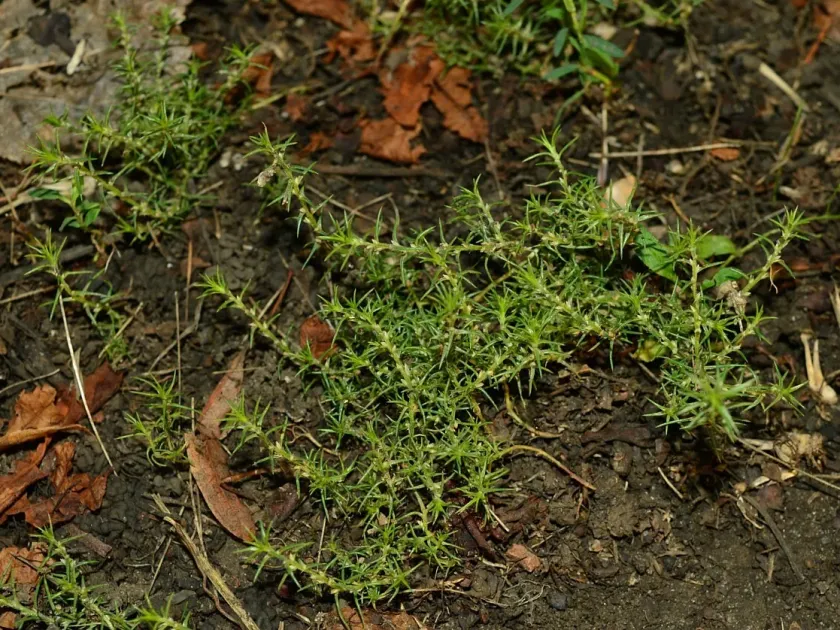
The plant exhibits a prostrate or ascending growth habit, with small linear leaves densely arranged along the stem. Its reproduction is highly efficient, as it produces numerous seeds that can persist in the soil seed bank for extended periods.
The geographic distribution of this plant includes arid and semi-arid regions. It prefers open areas with high exposure to sunlight, where it can establish large colonies if soil moisture and nitrogen levels are managed improperly.
There is currently no direct agricultural utilization of Polycnemum heuffelii, as it lacks nutritional or industrial value. Agronomic efforts are focused exclusively on mitigation and effective removal from crop rotations.
Main diseases and pests
The primary agricultural threat posed by this species is the significant yield reduction due to competition for water and micronutrients. It can quickly overtake early-stage crops, especially in low-density planting scenarios.
In terms of plant health, Polycnemum heuffelii can serve as an alternative host for various pests, including aphids. This necessitates proactive monitoring of weed populations near high-value crop fields to prevent pest outbreaks.
Mechanical control measures, such as inter-row cultivation and harrowing, are highly effective against this weed. Removing the plants before they reach the flowering stage is essential to prevent seed dispersal across the field.
Chemical control involves the application of selective herbicides during the early vegetative phase of the weed. Precise timing and dose calibration are crucial to maximize efficacy and ensure the safety of the main crop.
Adopting sustainable crop rotation practices helps reduce the weed seed bank in the soil. By rotating deep-rooted crops with those that create canopy closure, farmers can naturally suppress the growth of Polycnemum heuffelii.