
Field needleleaf
Polycnemum arvense
Description
Growing requirements
Field needleleaf (Polycnemum arvense) is an annual herb belonging to the Amaranthaceae family. Although it is not a cultivated crop, it is a significant botanical species often found in agricultural environments where it acts as an invasive weed.
The plant is native to temperate regions and is well-adapted to colonizing various soil types. It is particularly prevalent in disturbed sites, such as arable lands, fallow fields, and roadsides where competition is relatively low.
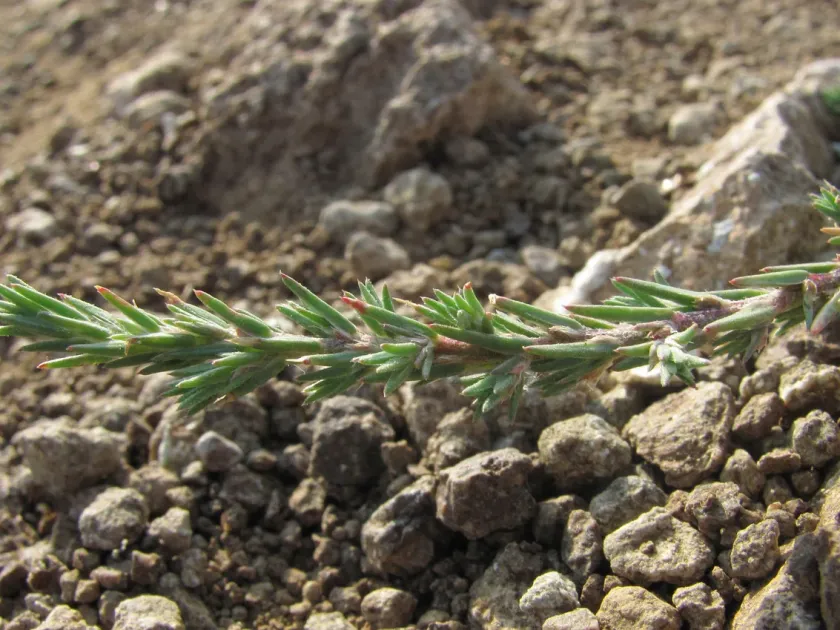
Botanically, it is characterized by its small, needle-like leaves and branched, spreading stems. Its ability to tolerate low soil moisture and intense sunlight makes it a persistent nuisance in dryland farming systems.
Field needleleaf thrives in open habitats and requires ample light to reach full maturity. Its lifecycle is tightly synchronized with early spring and summer conditions, allowing it to complete its seed production before major harvest activities.
Proper soil management, including early harrowing and crop rotation, is essential for minimizing the impact of this plant. Farmers focus on eliminating its presence during the critical stages of crop establishment to prevent yield reduction.
Main diseases and pests
The presence of field needleleaf in agricultural fields poses a threat by competing for vital resources like water, nutrients, and sunlight, which are necessary for the development of primary crops.
This weed acts as a potential host for various plant pathogens. By harboring these fungi or viruses, it increases the overall disease pressure within the agricultural field, leading to potential crop losses.
It also provides a habitat for specific insect pests. When left uncontrolled, these pests can migrate from the weeds to adjacent crops, causing significant damage during the growing season.
Chemical control remains one of the most effective methods for managing this species. Applying selective herbicides during the early stages of the weed's development provides the best results for crop protection.
Furthermore, because of its high fertility, seed bank management is crucial. If the plant is allowed to reach the seed-bearing stage, it can infest the soil for many seasons, necessitating long-term monitoring.