
Polycnemum fontanesii
Polycnemum fontanesii
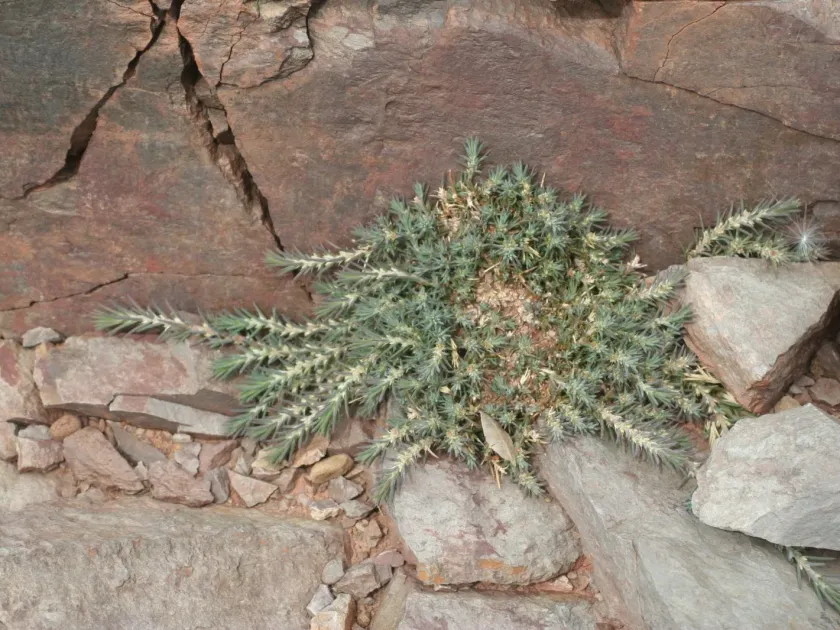
Description
Sowing dates
Polycnemum fontanesii is a herbaceous plant primarily identified in agricultural settings as a weed rather than a cultivated crop.
The germination period usually begins in early spring, once the soil temperature is sufficient to trigger the metabolic processes in the seeds.
As a weed species, it demonstrates rapid development, often establishing itself before the primary commercial crops can form a closed canopy.
The lifecycle of this plant is synchronized with the early stages of agricultural production, which facilitates its spread through contaminated machinery.
Agronomic control requires precise timing of field operations to eliminate young plants before they reach their reproductive stage of development.
Growing requirements
Belonging to the Amaranthaceae family, this species possesses distinct biological traits that allow it to thrive in challenging environments.
It typically prefers well-drained, sandy, or stony soils and is commonly observed in disturbed habitats with neutral to alkaline soil pH levels.
Polycnemum fontanesii is highly drought-tolerant, exhibiting survival strategies that enable it to persist in arid and semi-arid climatic regions.
The plant demonstrates a strong preference for high-light intensity, avoiding shaded areas where its photosynthetic efficiency would be restricted.
It does not require high levels of soil fertility, allowing it to compete effectively in marginal agricultural lands or poorly managed fields.
Main diseases and pests
The primary concern regarding this species is its aggressive competitive nature, which depletes essential soil moisture and nutrient resources.
Typical pathogens that may affect this plant include various fungal infections, such as powdery mildew, which can spread to nearby susceptible crops.
Insects that specialize in the Amaranthaceae family can act as vectors for various diseases or cause direct damage to the plant tissue.
The persistence of the seed bank in the soil is a significant threat to long-term weed management, as seeds may remain dormant for several years.
- Integrated weed management strategies.
- Post-emergence herbicide applications.
- Crop rotation to break the weed lifecycle.