
Polycnemum majus
Polycnemum majus
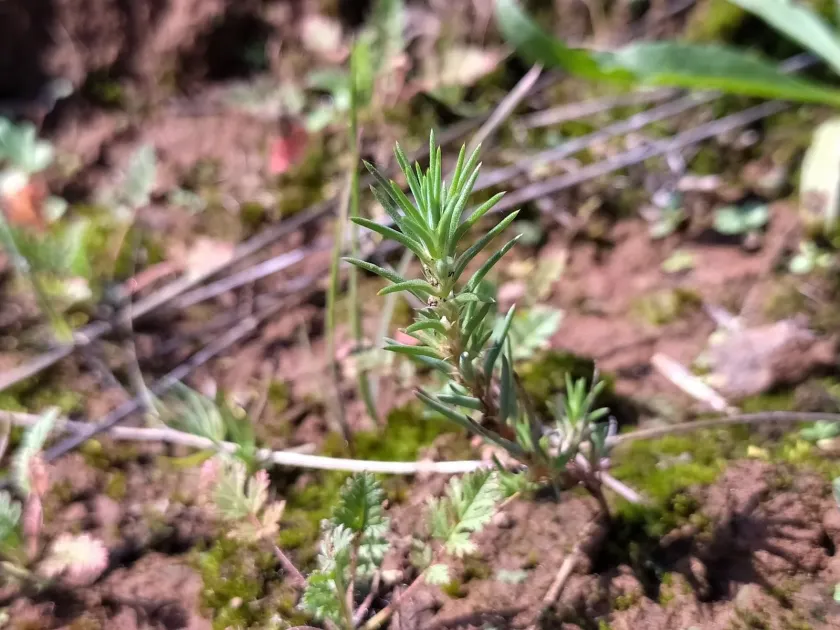
Description
Sowing dates
Polycnemum majus is typically classified as an early spring weed. Its germination cycle begins as soon as the soil temperatures reach favorable levels following the winter frost.
The seeds show high germination rates under moist conditions. A significant flush of seedlings usually appears during early spring, posing an immediate threat to the establishment of early-sown crops.
In modern agriculture, the timing of seedling emergence often overlaps with the drilling of spring cereals. This requires immediate intervention to ensure that crops do not suffer from early-stage resource competition.
The biological capacity of the species allows for multiple germination flushes throughout the growing season if moisture levels are adequate. This plasticity increases the challenge for weed management programs.
Rapid maturity is a key survival trait. The plant completes its life cycle quickly, which forces farmers to coordinate weed control efforts precisely to prevent seed rain across fields.
Growing requirements
Polycnemum majus, commonly known as greater needleleaf, belongs to the Amaranthaceae family. It is a persistent annual plant well-adapted to disturbed habitats and agricultural fields.
This species thrives in well-lit environments and is particularly adapted to light-textured, sandy, or loamy soils. It has a high tolerance for low-nutrient soil conditions where competition is minimal.
Environmental preferences include high resilience to drought. The plant is frequently found in arid or semi-arid regions where it successfully outcompetes native flora for limited water resources.
It prefers warm growing conditions with temperatures ranging between 20°C and 25°C for optimal development. Exposure to high-intensity sunlight is vital for its maturation process.
Agronomic management relies on crop canopy density to suppress its growth. In fields with high crop density, light competition effectively stunts the development of Polycnemum majus, reducing its impact on yield.
Main diseases and pests
The plant demonstrates high resistance to common fungal and bacterial diseases. Its robust nature makes it difficult to manage through biological control agents alone.
Insects and pests rarely cause significant damage to the plant. The physical properties of its leaves and stems offer natural protection, making it a low-priority host for many common agricultural pests.
The primary threat from Polycnemum majus is its competitive impact on crop growth. It acts as a nutrient and water thief, significantly reducing the yield potential of crops in neglected fields.
Chemical control involving broad-spectrum herbicides is the standard practice for field management. Application timing is critical; treatment should occur before the plant enters its reproductive stage.
Effective management strategies include integrating mechanical cultivation and chemical control. Preventing the plant from setting seeds is the most important step to ensure long-term reduction of the weed seed bank in the soil.