
Saxaul
Haloxylon ammodendron
Description
Sowing dates
Sowing of the black saxaul (Haloxylon ammodendron) is carried out primarily in autumn or early spring, when the soil is saturated with moisture from winter precipitation. The seeds of this plant have an extremely short lifespan, so using fresh seeds is critical to achieving high germination rates.
The seeding depth ranges from 1 to 2 centimeters. When sowing in desert environments, it is essential to ensure close contact between the seed and the soil, although planting too deep can be fatal for fragile seedlings that may not reach the surface through the thick sand.
On an industrial scale, seeds are sown using aircraft or specialized forest planting machinery. This approach allows for the coverage of vast territories in need of sand stabilization, where manual labor would be economically impractical.
Seedlings emerge quickly under favorable temperatures, usually between +20 and +25 degrees Celsius. The first weeks of the plant's life are the most critical, as the root system must reach deeper, moist soil horizons before the arrival of the summer heat.
Planting density varies based on the intended use: for shelterbelts, the distance between rows is typically 3 to 5 meters. This ensures that each plant has enough space to thrive in an environment where soil resources are severely limited.
Growing requirements
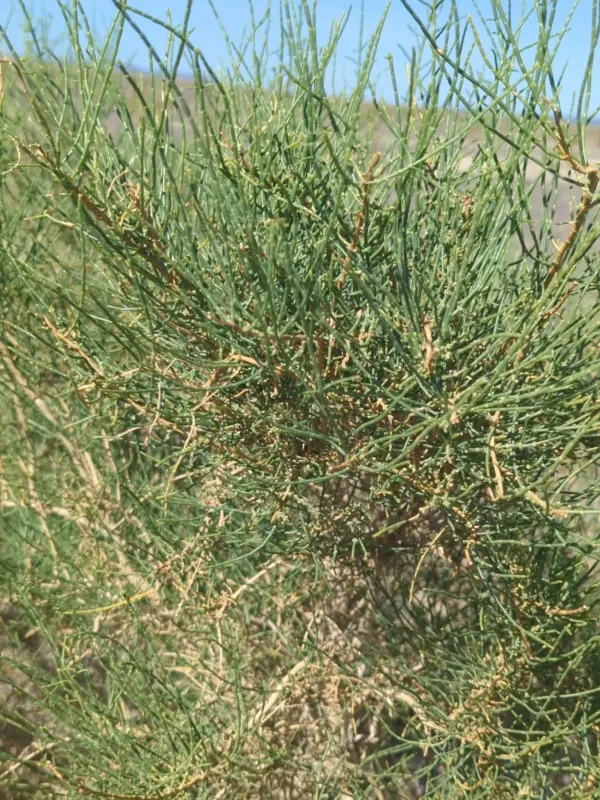
Haloxylon ammodendron is a halophytic and xerophytic plant belonging to the Amaranthaceae family, perfectly adapted to the extreme conditions of arid zones. A key botanical feature is its reduced leaves, which have evolved into scales to minimize transpiration.
The plant demonstrates exceptional tolerance to saline soils, including salt flats and deserts where other tree species perish. It is capable of withstanding prolonged drought by accessing water from deep aquifers with its powerful taproot system.
Climatic requirements include a need for high summer temperatures and the ability to endure sharp daily temperature fluctuations. During winter, saxaul can withstand harsh frosts, making it a unique crop for regions with extreme continental climates.
Well-aerated sandy or sandy-loam soils are ideal for optimal growth. Saxaul plays a crucial role in phytomelioration, preventing soil erosion and fixing shifting sands, thereby protecting agricultural land from sand drifts.
- High salt tolerance
- Adaptation to low precipitation
- Wind resistance
- Deep taproot system
- Long growing season
Yield
The yield of black saxaul is measured not in fruits, but in wood biomass and its contribution to ecosystem restoration. When properly planted on desert lands, the plant produces significant green biomass, which serves as winter fodder for camels.
Bioproductivity is directly dependent on the depth of the groundwater table. Under optimal conditions, the plant can reach a height of 4–5 meters, making it a valuable resource for producing high-calorific firewood.
An important metric of economic efficiency is the biomass growth in the first 5–7 years. During this time, the plant actively forms skeletal branches, which later serve as wood with excellent heating properties.
Seed production begins at 3–5 years of age. Seeds are collected mechanically or by hand, providing an additional income stream for farms engaged in reforestation in desert regions.
Economic benefits also include indirect gains: pastures protected by saxaul produce more stable yields of forage grasses, thereby increasing the overall productivity of livestock farms in desert environments.
Main diseases and pests
The primary threats to young plantations are pests such as saxaul wood borers and various types of weevils. These insects can damage the wood, weakening the tree and making it susceptible to secondary fungal infections.
Diseases in saxaul are often linked to pathogenic fungi that cause rot when water management is poor or if the soil remains excessively wet. In harsh desert conditions, these diseases are far less common than in nurseries with excessive irrigation.
Livestock grazing in saxaul habitats is a significant threat. Young shoots are highly attractive to camels and sheep, which can lead to the complete loss of plantations if temporary fencing is not provided.
Anthropogenic pressure remains the leading cause of habitat degradation. Illegal logging for firewood leads to the loss of pasture quality, as saxaul recovery after physical damage is extremely slow in arid conditions.
To protect against pests, it is recommended to maintain proper spatial isolation during plantation setup and to use high-quality, disease-free seed stock at the germination stage.
Harvesting
Harvesting and wood collection are carried out primarily as sanitary measures. Wood is harvested selectively, removing old or dead specimens to maintain the integrity of the soil-protecting cover of the desert.
Fodder collection for livestock is typically done in late autumn. Saxaul shoots contain essential minerals that help livestock survive the harsh winter conditions when forage is scarce on the ranges.
If saxaul is used for fuel, harvesting must be strictly regulated according to forestry management plans. This allows the root system to remain intact, enabling the plant to resprout and recover after cutting.
Seed collection occurs in late autumn and early winter, when the fruits turn a characteristic grayish or brown color. Collected seeds are carefully cleaned and dried for subsequent long-term storage.
The entire harvest cycle requires a gentle approach to the ecosystem. The use of heavy machinery is prohibited, as it destroys the fragile top layer of desert soil, leading to the initiation of erosion processes.