
Saxaul
Haloxylon aphyllum
Description
Sowing dates
Saxaul (Haloxylon aphyllum) is a perennial woody plant belonging to the Amaranthaceae family. It is a highly specialized xerophyte that has adapted to thrive in the harsh, arid environments of Central and West Asian deserts.
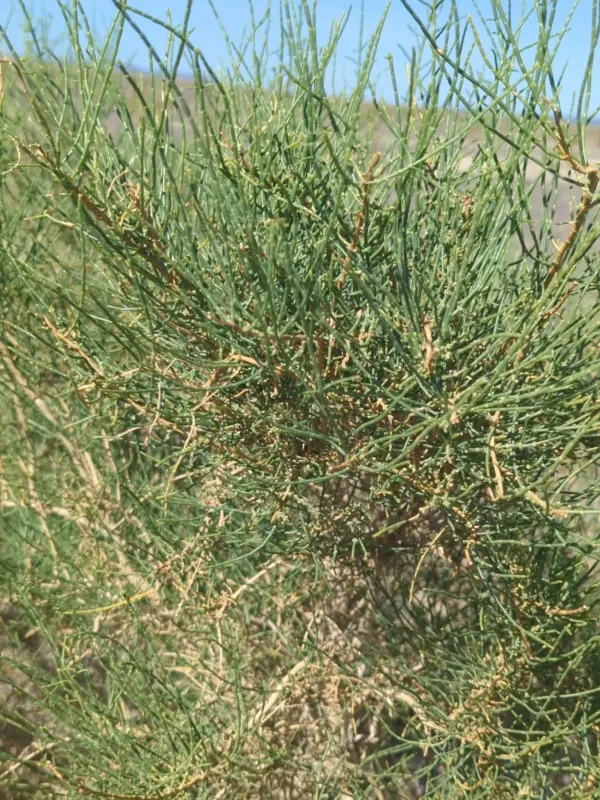
The plant is anatomically unique, featuring reduced scale-like leaves that prevent water loss. Photosynthesis is carried out by its green, succulent shoots, which are resilient to the high solar radiation and extreme temperatures typical of desert biomes.
Native to vast desert regions, Saxaul is used extensively in forestry and land management to prevent soil erosion and stop the desertification of fertile lands surrounding the arid zones.
Sowing occurs during late autumn or winter, relying on natural snowmelt or seasonal precipitation. Seeds are distributed either manually or using agricultural machinery designed for low-moisture environments.
A crucial factor in successful establishment is the timing of the seed dispersal. Seeds are short-lived and must make contact with damp sand during the germination window to ensure seedling survival.
Growing requirements
Saxaul is an obligate heliophyte, meaning it requires full sun exposure and cannot tolerate competition from taller vegetation or shading. It is remarkably tolerant of saline soils, often growing in substrates where other vegetation fails.
The climate requirements for this species are extreme, as it withstands temperatures ranging from -30°C to +50°C. Its survival strategy involves a deep, extensive taproot system that taps into underground water reservoirs.
Soil management for Saxaul plantations involves minimizing human and animal disturbance. Because growth is slow during the initial years, protective fencing is essential for the maturation of the young stands.
No industrial irrigation is required for mature Saxaul trees, as they are adapted to natural soil water availability. In nursery settings, controlled watering is used only during the first months of life to establish the root system.
The plant thrives on sandy and loamy soils with high mineral content. Proper spacing is required to prevent water competition between individuals as the root systems develop laterally.
Yield
In terms of agricultural output, Saxaul provides substantial ecological yield rather than crop harvests. Its primary utility is the stabilization of sand dunes, which prevents drifting sand from covering nearby infrastructure and farmland.
The wood of the Saxaul is exceptionally dense and rich in energy, historically used as fuel by nomadic tribes. However, current environmental policies focus on preservation and sustainable use, restricting massive logging.
Saxaul serves as a high-quality forage plant for livestock, especially camels. Its succulent green twigs contain sufficient minerals and moisture to sustain desert-adapted animals throughout the dry season.
Seed harvesting is conducted to support further afforestation efforts. Yields are calculated based on the successful establishment of new patches per hectare in desert restoration projects.
The long-term yield of a Saxaul plantation is measured in the hectares of stabilized land. These areas eventually become more stable ecosystems, capable of supporting secondary vegetation and increased biodiversity.
Main diseases and pests
Uncontrolled livestock grazing is the primary threat to the sustainability of young Saxaul plantations. Camels and goats can quickly destroy a large number of saplings if allowed into a protected area.
Entomological pests such as wood-boring beetles and certain leaf-eating insects can cause significant damage. These pests are particularly dangerous to trees that are already stressed by long-term drought.
Fungal root diseases can emerge in plantation nurseries if the soil drainage is poor or if the moisture levels are excessively high compared to the plant's natural arid habitat.
Human activities, primarily illegal logging for firewood, continue to pose a threat. The removal of mature plants destabilizes the sand and leads to renewed wind erosion, reversing decades of work.
Climatic shifts resulting in the dropping of groundwater levels represent a systemic threat. If the water table falls below the capacity of the Saxaul roots to reach, even established stands can begin to desiccate.