
Haloxylon salicornicum
Haloxylon salicornicum
Description
Sowing dates
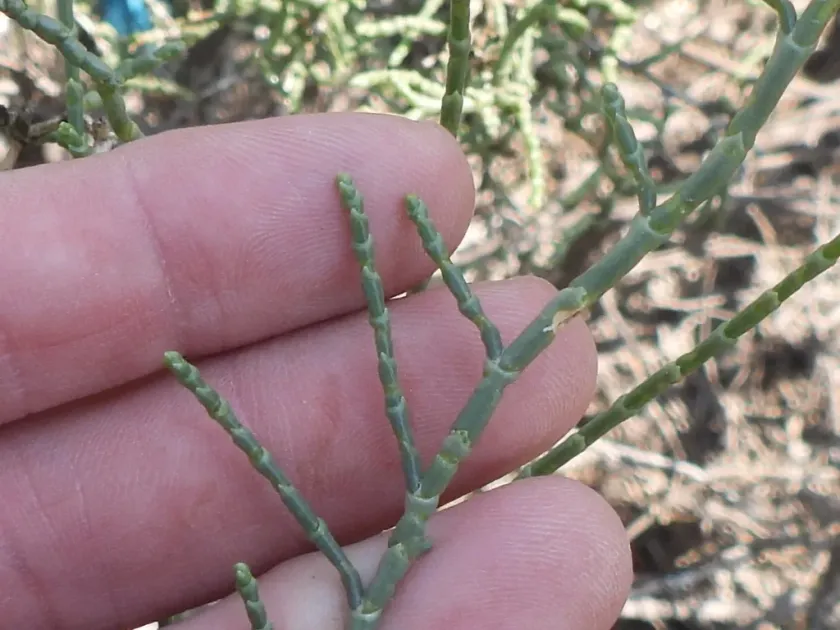
Haloxylon salicornicum, a member of the Amaranthaceae family, is a highly specialized shrub native to harsh, arid desert environments.
Sowing should be performed immediately after seed harvesting, as the seeds have a very short lifespan and lose viability quickly under storage conditions.
The optimal sowing time aligns with the seasonal onset of rainfall, which provides the necessary moisture for seed germination and initial seedling establishment.
Seeds are sown at a shallow depth of 1-2 centimeters in rows to ensure optimal spacing for future growth and soil stabilization effectiveness.
Successful establishment relies on the seeds maintaining contact with moist soil, allowing the taproot to quickly penetrate deeper into the ground.
Growing requirements
This species is extremely photophilous and requires full sun exposure; it cannot thrive in areas with any form of shading or forest canopy competition.
It is remarkably tolerant to high soil salinity and can grow in saline desert soils that are typically toxic to most agricultural crop species.
Haloxylon salicornicum is adapted to extreme desert climates characterized by high diurnal temperature fluctuations and very low annual precipitation.
Its deep root system allows the plant to reach groundwater reserves, which is essential for survival during prolonged periods of drought.
As a key component of desert ecosystems, it plays a vital role in preventing wind erosion and improving the structural integrity of sandy soils.
Yield
The primary economic value of this crop is its role in land reclamation and the stabilization of moving sand dunes near agricultural zones.
In pastoral regions, the foliage serves as a crucial browse source for camels, providing nutrition in areas where other vegetation cannot survive.
The dense wood of the shrub is historically significant as fuel, though modern management focuses strictly on conservation and environmental protection.
While biomass yield per hectare is modest compared to traditional crops, its ecological output in restoring degraded lands is exceptionally high.
Sustainable harvesting of seeds is often conducted to support large-scale desert greening projects across arid regions of the world.
Main diseases and pests
The main threats to young plantations include small rodents, which can dig up or consume seedlings, significantly reducing the density of the crop.
Overgrazing by domestic livestock is a major factor limiting the natural recruitment of new plants and the long-term survival of young stands.
Despite being resilient to many pathogens, the plant is susceptible to mechanical damage from human activities and heavy off-road machinery.
Due to its hardy nature, insect outbreaks and viral or fungal diseases are rarely reported as major economic concerns for this species.
The long-term conservation of Haloxylon salicornicum relies on establishing protected exclusion zones where human and livestock interference is controlled.