
Saxaul
Haloxylon persicum
Description
Sowing dates
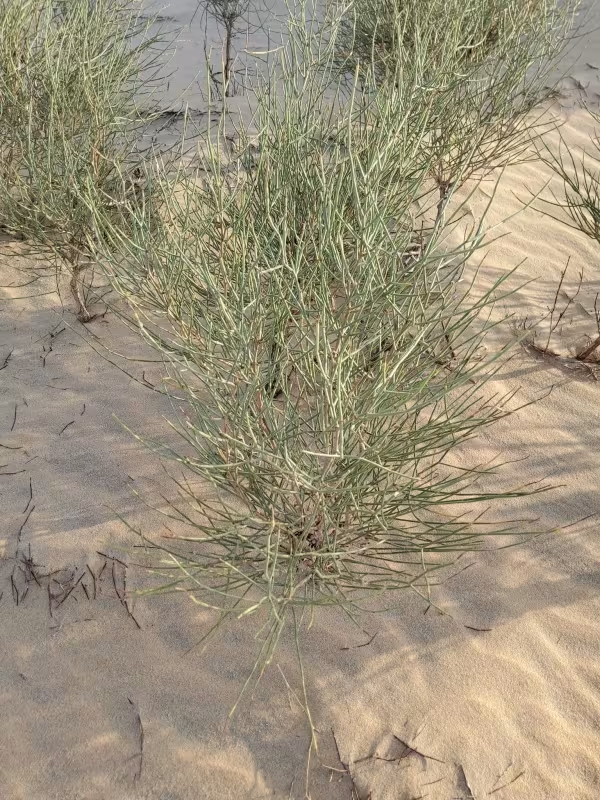
Saxaul (Haloxylon persicum) is a shrub-like tree belonging to the Amaranthaceae family, essential for reclaiming arid environments. The seeds of the saxaul have a very short lifespan, necessitating sowing immediately after collection, typically during the autumn or winter months.
The ideal sowing method involves embedding seeds into soil moistened by natural rainfall. This ensures that the seeds germinate before the onset of the scorching summer, allowing the root system to develop sufficiently to tap into deeper soil moisture reserves.
Sowing depth is critical; seeds should be placed at 1 to 3 centimeters below the surface. Mechanical sowing equipment is often used in large-scale reforestation projects to ensure uniform coverage and proper soil-to-seed contact.
Due to the fragile nature of young seedlings, minimizing competition from existing vegetation is vital. Site preparation usually involves mechanical clearing or strip plowing to provide a clear environment for the emerging plants.
Successful establishment depends heavily on using high-quality, viable seeds. Regular monitoring during the first few weeks of the growing season is crucial to assess germination rates and plan for any necessary supplementary seeding.
Growing requirements
The saxaul is a quintessential xerophyte and halophyte, perfectly adapted to extreme desert conditions. It thrives in high temperatures, reaching up to 50°C, and can withstand freezing winters, making it one of the most resilient plants in its habitat.
Soil requirements are relatively modest, as the plant prefers loose, sandy substrates where it can easily extend its deep, extensive root system. It cannot tolerate waterlogged soils, which may cause the roots to rot rapidly.
Sunlight is non-negotiable; saxaul requires intense solar radiation to maintain its photosynthetic activity, which takes place in its small, green, jointed branches rather than traditional leaves.
The root system can extend several meters deep, allowing the plant to reach groundwater tables. This capacity for deep irrigation makes it capable of surviving for long periods without surface water in the harshest desert climates.
Effective growth depends on low humidity and high air circulation. It excels in regions where sand dunes are active, as the plant effectively traps sand and creates a stabilized micro-environment for other desert flora.
Yield
While saxaul is not a commercial crop in the traditional sense, its yield is measured by its ecological impact. It is a vital tool for preventing desertification and sand dune encroachment, protecting agricultural lands and human settlements.
The plant provides valuable forage for camels and other livestock during the winter season. Its ability to produce biomass under extreme conditions makes it a crucial resource for pastoral communities in desert regions.
Historically, saxaul wood has been used as a high-density, high-calorific fuel source. However, modern agronomic management emphasizes its role as a windbreak and soil stabilizer rather than a commercial timber product.
The productivity of saxaul forests is measured by their ability to reduce wind speed by up to 90% at the soil surface, preventing soil erosion and loss of fertile land in surrounding areas.
Harvesting seeds for further reforestation efforts is a significant economic activity in arid regions, supporting the restoration of vast territories impacted by climate change and land degradation.
Main diseases and pests
Insects, such as beetles and weevils, pose the greatest threat to saxaul development, specifically targeting the buds and young shoots. These pests can significantly reduce the vitality of young plantations during years of population outbreaks.
Small rodents, including gerbils, often feed on newly planted seeds and seedlings, leading to high mortality rates. Integrated pest management strategies are often necessary to protect young forests during their vulnerable establishment phase.
Fungal diseases are rare but can occur in unnaturally humid or overcrowded conditions. Maintaining proper spacing and ensuring adequate soil drainage are the primary ways to prevent the spread of these pathogens.
Overgrazing by local livestock remains the most significant threat to the survival of young saxaul stands. Grazing animals can destroy entire plantations before the plants have a chance to anchor themselves firmly into the sand.
To mitigate these threats, it is recommended to fence off young plantations for several years. This protective measure allows the plants to reach a sufficient height and root depth to withstand both herbivory and minor environmental disturbances.