
Broom-like saxaul
Haloxylon scoparium
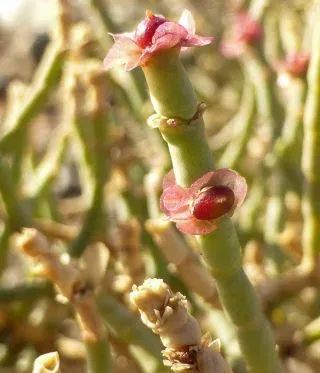
Description
Sowing dates
Broom-like saxaul (Haloxylon scoparium) is a member of the Amaranthaceae family. It is a shrub species that plays a vital role in phytoremediation and the stabilization of shifting sands in extremely arid and desert environments.
Sowing is typically performed in late autumn or early spring when surface soil moisture is sufficient to support germination. Because the seeds have a relatively short lifespan, it is essential to use freshly harvested material to achieve optimal germination rates.
When sowing in sandy terrains, seeds should be placed at a minimal depth or distributed across the surface, followed by compaction of the sand. Deep burial must be avoided as the small seeds lack the energetic reserves required to sprout through a dense layer of substrate.
While the plant propagates by seed in the wild, manual row sowing or cluster methods are used for large-scale land restoration. Mechanical sowing techniques facilitate uniform distribution, which is crucial for creating effective windbreaks and sand-fixing cover.
Ensuring an appropriate plant density is critical for the long-term effectiveness of the plantation. During the establishment phase, the primary focus is on protecting the site from livestock and ensuring that the seedlings are not smothered by shifting dunes before their root systems mature.
Growing requirements
This species is exceptionally drought-tolerant and can survive prolonged periods without precipitation. It thrives in sandy and rocky deserts where the extreme scarcity of moisture prevents the survival of most other vegetation types.
Broom-like saxaul prefers light sandy, loamy, and saline soils. It has a high tolerance for soil salinity, making it an indispensable tool for the rehabilitation of degraded, salt-affected landscapes and the prevention of desertification.
The plant is highly heliophilic and cannot survive in shaded conditions. Intense sunlight is required for photosynthesis, as the true leaves are reduced to small scales, and the green succulent branches act as the primary photosynthetic organs.
The species adapts well to extreme temperature fluctuations, ranging from intense summer heat to severe winter frosts. Its deep-reaching root system allows it to extract moisture from deep aquifers, enabling survival in the harshest desert climates.
Maintenance is minimal, consisting mainly of protection from overgrazing during the first few years of growth. Once established, the shrub creates a dense structure that significantly reduces wind speed at the soil surface, effectively preventing erosion.
Main diseases and pests
The primary threat to young saxaul stands is uncontrolled livestock grazing, which can destroy new growth and damage the root system. Specific pests, such as saxaul psyllids and certain beetles, may occasionally attack the branches, affecting overall plant vigor.
Fungal infections are infrequent and are generally linked to cases of excessive soil moisture or poor drainage. Prevention focuses on selecting sites with good air circulation and preventing stagnant water, which helps maintain plant health and structural integrity.