
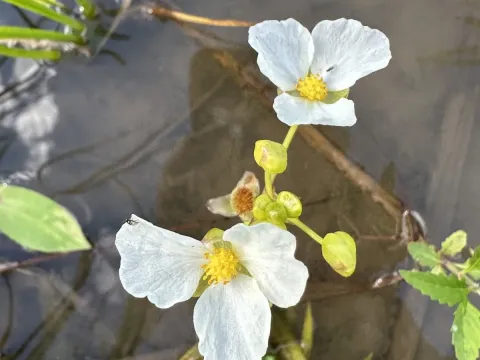
Sessile-fruited arrowhead
Sagittaria rigida
Sessile-fruited arrowhead (Sagittaria rigida) is a perennial aquatic plant belonging to the Alismataceae family. It is native to North America, primarily inhabiting shallow regions of marshes, lakes, and slow-moving streams.
What the section contains
Sessile-fruited arrowhead
This species is highly adaptable to various water levels but requires nutrient-rich, silty or clayey substrate to thrive. It performs best in full sun, which promotes the growth of its distinctive emergent rigid leaves.
Water depth is a critical parameter for Sagittaria rigida. It typically grows well at depths ranging from 10 to 40 centimeters. The plant can withstand seasonal water level fluctuations, which is a key trait of its native riparian habitats.
The botanical structure of the plant features heterophylly: submerged leaves are strap-shaped, while emergent leaves are rigid and lanceolate to arrow-shaped. This structural flexibility allows the plant to flourish in fluctuating aquatic environments.
In landscaping, this plant is valued for its hardiness and ability to naturally filter water. It is an excellent choice for stabilizing the edges of ponds and creating diverse habitats within wetland garden designs.
Sagittaria rigida is primarily susceptible to leaf-spotting fungal diseases, especially in stagnant water conditions where humidity levels remain excessively high throughout the growing season.
Herbivorous insects, particularly aphids, can infest the emergent leaf blades during mid-summer. These pests feed on plant juices, which may result in yellowing or stunted growth if left untreated.
Invasive aquatic species or aggressive algae blooms can easily outcompete the arrowhead for nutrients and sunlight, requiring regular maintenance and manual weeding of the aquatic area.
Waterfowl, such as geese or ducks, can cause mechanical damage by pulling out young plants. Protecting new plantings with netting is often necessary in areas with high avian activity.
General maintenance practices, including the removal of decaying organic matter from the pond floor, significantly reduce the risk of pathogen accumulation and ensure healthy plant development.