
Short-beaked arrowhead
Sagittaria brevirostra
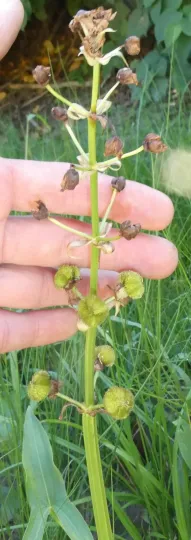
Description
Growing requirements
The short-beaked arrowhead (Sagittaria brevirostra) belongs to the Alismataceae family. It is a perennial aquatic herb native to North America, typically found in shallow marshes, pond margins, and slow-moving streams.
The plant thrives in full sun and requires nutrient-rich, silty or mucky soil to reach its full growth potential. It is adapted to water depths ranging from a few centimeters to half a meter, depending on the stage of development.
One of the most notable features of this species is its winter hardiness, as the plant can withstand freezing temperatures by forming specialized tuberous structures that remain dormant beneath the frost line in the sediment.
Botanically, it is characterized by distinct arrowhead-shaped leaves that extend above the water surface, facilitating efficient gas exchange. The plant also produces underwater ribbon-like leaves, which are typical of its submerged growth phase.
Vegetative propagation is the primary method of spread, occurring via stolons that end in tubers. These structures store energy for the plant during the winter, allowing for rapid expansion in the subsequent growing season.
Yield
The agricultural and environmental use of Sagittaria brevirostra is largely focused on water quality management. It serves as an excellent biofilter, sequestering excess nitrates and phosphates from agricultural runoff.
Although less commonly cultivated for food than its Asian relatives, the tubers of the short-beaked arrowhead are a potential source of starch, which may be harvested in sustainable wetland farming systems.
The plant is increasingly used in restoration ecology to stabilize pond banks and prevent soil erosion. Its extensive root system holds the substrate in place, reducing the sediment load in restored wetlands.
As a biomass producer, this crop contributes significantly to the creation of wildlife habitats. It supports a variety of aquatic invertebrates and provides nesting material for waterfowl.
Successful yield management involves monitoring water chemistry to ensure optimal nutrient availability, which directly correlates to the production of tubers and foliage throughout the growing season.
Main diseases and pests
Key threats include various fungal pathogens that can cause leaf spots or rot, particularly in stagnant waters where oxygen levels are low and circulation is insufficient for healthy growth.
Insect pests, including aquatic beetle larvae and moth caterpillars, may feed on the emergent foliage, potentially causing significant damage to the plant's ability to produce energy through photosynthesis.
Invasive species and aggressive aquatic weeds often compete for space and resources, which can suppress the growth of Sagittaria brevirostra if not managed through proper site maintenance.
Pollution from industrial runoff or heavy agricultural pesticides can lead to physiological stress in the plant, rendering it more susceptible to opportunistic infections and limiting its reproductive success.
Improper sediment conditions, such as excessive compaction or lack of organic material, can stunt the development of tubers and reduce the plant's ability to spread and survive seasonal changes effectively.