
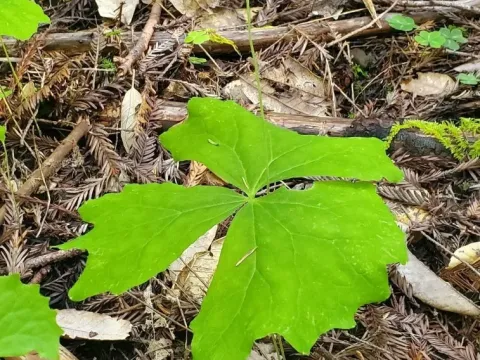
Vanillaleaf
Achlys triphylla
Vanillaleaf (Achlys triphylla) is a perennial herbaceous plant belonging to the Berberidaceae family. It is native to the Pacific Northwest of North America, where it thrives in moist, shaded forest floors and creates lush ground cover.
What the section contains
Vanillaleaf
Botanically, the plant is distinguished by its unique foliage consisting of three distinct leaflets atop a slender stalk. During its flowering phase, it produces an erect spike covered in tiny, white, petal-less flowers that give it a delicate, ephemeral appearance.
To successfully cultivate this species, the soil must be rich in organic matter and possess a slightly acidic pH. The root system is shallow, necessitating a mulch layer to preserve moisture and protect the rhizomes from rapid temperature fluctuations in the substrate.
The plant is classified as highly shade-tolerant, making it an excellent choice for woodland gardens. It requires protection from intense sunlight and drought; thus, planting it in sites with filtered light or deep shade is essential for maintaining plant vigor.
Agricultural management involves ensuring consistent moisture levels throughout the growing season. Propagation is typically achieved by division of the creeping rhizomes during the dormant period, allowing the plant to spread and establish dense colonies in suitable garden beds.
The common name "Vanillaleaf" originates from the plant's unique biochemical property: the leaves contain coumarin. When dried, the foliage emits a sweet, vanilla-like fragrance, which has historically been utilized for creating potpourri and natural aromatic sachets.