
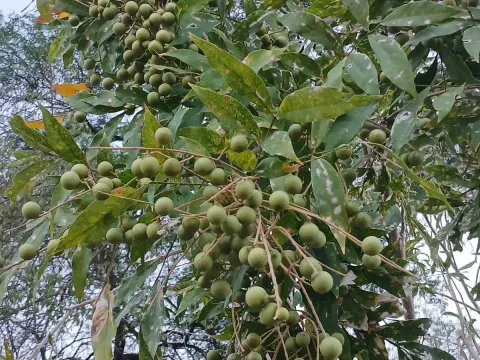
Florida soapberry
Sapindus marginatus
Sapindus marginatus, commonly known as Florida soapberry, is a member of the Sapindaceae family. It is a deciduous tree species native to North America, known for its ability to thrive in specific subtropical and temperate environments.
What the section contains
Florida soapberry
The tree prefers well-drained, fertile soil and requires plenty of sunlight for optimal development. While it exhibits tolerance to a variety of soil types, it performs best in soils that are slightly acidic to neutral and have good aeration.
Regarding climate, Sapindus marginatus is adapted to regions with long growing seasons. It is moderately drought-tolerant once established but requires consistent moisture during its juvenile growth phases to build a resilient root system.
Botanically, the species is defined by its pinnately compound leaves and drupaceous fruits. These fruits are notable for containing high concentrations of saponins, natural glycosides that act as surfactants.
The cultural requirements for this tree emphasize the need for adequate spacing to prevent canopy overcrowding, which is essential for maximizing fruit yield and maintaining overall tree health.
Harvesting of the soapberry fruit occurs in late autumn when the drupes reach physiological maturity, indicated by a dark, leathery, and dry outer pericarp.
The fruits are harvested either by hand-picking or mechanical shaking of the branches. Post-harvest, they must be air-dried to reduce moisture content, ensuring long-term stability and saponin potency.
The primary economic use of Sapindus marginatus is the extraction of natural saponins for use in bio-detergents, personal care products, and specialized industrial cleaning agents.
These natural surfactants are biodegradable and hypoallergenic, making them highly desirable in the modern market for sustainable and eco-friendly chemical alternatives.
Proper storage is essential to maintain the structural integrity of the dried fruits, as exposure to extreme humidity can lead to fungal degradation and loss of chemical efficacy.
The species is generally resistant to many pests due to the bitter, insecticidal properties of the saponins present in its tissues, providing a natural evolutionary defense.
However, the tree is susceptible to root rot and fungal infections, particularly in poorly drained soils where water logging creates an environment conducive to pathogen proliferation.
Leaf spot diseases, caused by various fungal pathogens, can occasionally occur, especially in stagnant air conditions. Improving airflow through structural pruning is the recommended mitigation strategy.
Scale insects and aphids may colonize younger, more succulent branches. Monitoring these populations during the spring growth flush is advised to prevent potential canopy stress.
Integrated pest management strategies are preferred, emphasizing sanitation and the maintenance of soil health to keep the trees vigorous and capable of resisting occasional infections.