
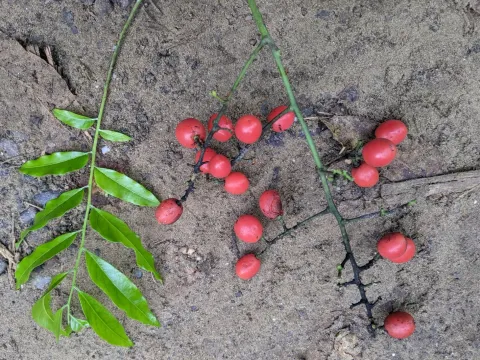
Ganophyllum
Ganophyllum
Ganophyllum is a genus of trees belonging to the Sapindaceae family. The most prominent species, Ganophyllum giganteum, is widely recognized for its robust growth and significant height, thriving primarily within the dense canopy of tropical rainforests in Africa and Southeast Asia.
What the section contains

Ganophyllum
This species requires a stable, humid tropical climate characterized by high annual precipitation and consistent temperatures. It thrives in deep, nutrient-rich soils that offer effective drainage, which is critical for sustaining the health and development of its extensive root systems.
Botanically, the tree features pinnate leaves and specialized fruit structures typical of the Sapindaceae family. It is adapted to compete for light in complex forest ecosystems, demonstrating a strong capacity for vertical growth and biomass accumulation over its long lifespan.
In terms of ecological requirements, Ganophyllum prefers environments where natural soil fertility is replenished through organic matter decay. It is sensitive to environmental degradation and requires intact ecosystems to reach its full productive potential in the wild.
Agrotechnical management of Ganophyllum involves sustainable forest monitoring and periodic, selective harvesting. Such practices ensure that the species remains a viable resource for future generations while maintaining the ecological integrity of the host environment.
The primary economic value of Ganophyllum lies in its high-quality timber, which is prized for its durability, hardness, and resistance to decay. These properties make it an excellent choice for demanding applications in construction, furniture production, and heavy joinery.
Harvesting operations are conducted in accordance with forestry standards aimed at sustainable yield. By focusing on selective logging, forestry managers prevent over-exploitation and promote the natural regeneration of the forest stand over time.
Beyond its timber value, Ganophyllum plays a vital role in local subsistence economies. Various parts of the tree have historically been utilized in traditional medicine and local craftsmanship, highlighting the cultural significance of the species in tropical regions.
Processing the harvested wood requires specialized machinery due to the timber's density and strength. Proper seasoning and kiln-drying techniques are essential to ensure the longevity of the finished products and to prevent warping or structural instability.
Current research in agroforestry explores the potential for cultivating Ganophyllum in managed systems. This approach seeks to harmonize the production of valuable timber with biodiversity conservation, soil protection, and the promotion of ecological sustainability.