
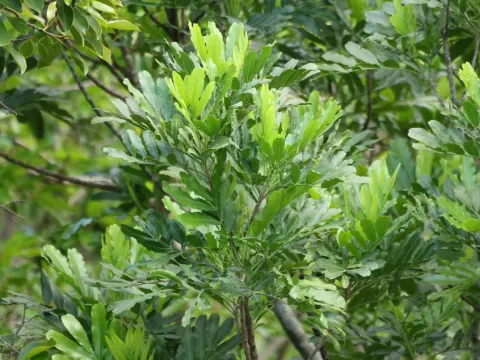
Filicium
Filicium Thwaites ex Benth. & Hook. f.
Filicium is a genus of evergreen trees belonging to the Sapindaceae family. The most widely cultivated species, Filicium decipiens, is highly prized for its dense, fern-like foliage and elegant, symmetrical growth habit.
What the section contains

Filicium
Native to tropical regions of East Africa, India, and Sri Lanka, this tree thrives in warm, humid climates. It is typically found in evergreen forest ecosystems where high temperatures and regular rainfall support its evergreen nature.
The cultural requirements for Filicium include well-draining, nutrient-rich soil. It is sensitive to waterlogged conditions, which can lead to root degradation, so planting sites must ensure proper hydrological balance.
Filicium is frequently utilized in landscape architecture, particularly in tropical and subtropical regions. Its ability to provide deep shade makes it an excellent candidate for parks, avenues, and urban greening projects where aesthetic value is required.
The tree prefers a full sun to partial shade position. While it is relatively hardy once established, young trees require consistent irrigation to support root system development and avoid stunted growth due to water stress.
The primary threats to Filicium health involve pests such as scale insects and mealybugs. These pests congregate on the underside of leaves and along stems, extracting sap and reducing the plant's overall vigor.
Root rot caused by Phytophthora or similar fungal pathogens is a critical risk, primarily associated with poor soil drainage. Managing soil moisture is the most effective preventative measure against these infections.
Leaf spot diseases can occur during prolonged periods of high humidity and poor air circulation. Proper pruning to open up the canopy significantly reduces the risk of fungal spread by improving ventilation.
Integrated Pest Management (IPM) should be applied to control outbreaks. This includes monitoring for early signs of infestation and, if necessary, applying horticultural oils or systemic insecticides to eliminate pest colonies.
To ensure long-term tree health, avoid damaging the root system during soil cultivation. Keeping the area under the canopy free of debris also helps reduce the habitat for soil-borne pathogens and pests.