
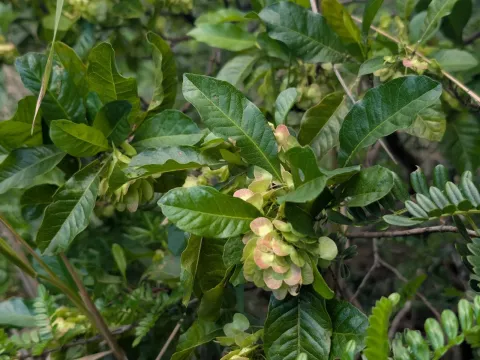
Hop bush
Dodonaea viscosa (L.) Jacq.
Propagation of Dodonaea viscosa is primarily achieved through seeds or semi-hardwood cuttings collected during the active growing season.
What the section contains
Hop bush
Seeds should be sown in a well-draining, sandy-based medium, ideally after being soaked in warm water to break seed dormancy and improve germination rates.
Cuttings should be treated with a rooting hormone and kept in a high-humidity environment with bottom heat to facilitate rapid root development.
Transplanting into the permanent garden site should occur after the last frost, ensuring the plants are placed in areas with optimal sun exposure.
Spacing requirements vary depending on the intended use, but a distance of 0.75 to 1.5 meters is generally recommended for hedge plantations to allow for healthy air circulation.
Dodonaea viscosa is a resilient shrub belonging to the Sapindaceae family, native to various tropical and subtropical regions across the globe.
The plant is highly valued for its adaptability to diverse soil types, including sandy, rocky, and saline soils, making it ideal for coastal stabilization.
It thrives in full sunlight and requires moderate watering; however, it exhibits remarkable drought tolerance once the root system is well-established.
The plant is sensitive to frost and should be protected in regions where temperatures drop significantly below freezing for extended periods.
Soil pH levels should ideally be neutral to slightly acidic, and the soil structure must ensure excellent drainage to prevent root rot issues.
The primary pests affecting Dodonaea viscosa include scale insects and spider mites, which thrive in hot, dry conditions and can cause leaf yellowing.
Root rot is the most common disease, usually caused by poor drainage or excessive irrigation, particularly in heavy or compacted soil profiles.
Integrated pest management, including the use of neem oil or targeted insecticidal soaps, is effective in controlling early-stage infestations.
Good cultural practices, such as proper spacing and avoid overhead watering, can significantly reduce the incidence of fungal pathogens like powdery mildew.
Regular monitoring of the foliage and root zone is essential, as early intervention prevents the spread of pathogens throughout the entire plantation.