
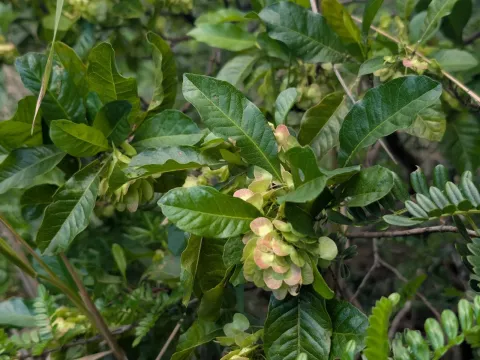
Dodonaea
Dodonaea
Dodonaea is a perennial shrub belonging to the Sapindaceae family, comprising approximately 70 species native to tropical and subtropical regions across Australia, Africa, and the Americas. The most well-known species, Dodonaea viscosa, is widely utilized for its hardy characteristics.
What the section contains


Dodonaea
The plant thrives in well-drained, sandy, or loamy soils with a neutral to slightly acidic pH level. It is exceptionally drought-tolerant but is sensitive to waterlogging, which can cause severe root damage and increase susceptibility to fungal pathogens.
Optimal growth requires warm climates with ample exposure to sunlight. While some species show moderate cold tolerance, Dodonaea is primarily suited for frost-free or mild-winter environments where it can maintain its evergreen foliage throughout the year.
Agronomic management includes regular pruning, which is essential for maintaining dense growth, particularly when the shrub is used for hedges or privacy screens. Consistent training helps in shaping the plant and promoting a healthy, robust structure.
The commercial significance of Dodonaea lies primarily in landscape architecture and environmental restoration, such as erosion control in arid areas. Additionally, the wood of some species is prized for its high density and is used in artisanal crafts.
The primary pests affecting Dodonaea include scale insects and spider mites, which typically thrive under conditions of low humidity or poor plant vigor. These pests can cause discoloration and leaf drop if left unmanaged.
Root rot remains the most serious disease risk, triggered predominantly by poor soil drainage and excessive irrigation. Ensuring a well-structured soil profile is the most effective preventative measure against such diseases.
Powdery mildew may occur when humidity is high and airflow is restricted, which is a common issue in dense plantings. Proper spacing and thinning of branches significantly improve air circulation.
Integrated pest management strategies are recommended, including the use of horticultural oils for scale control and systemic fungicides if early signs of fungal infections appear.
Routine monitoring of the plant's health, combined with balanced fertilization and proper moisture management, ensures the longevity and decorative value of the Dodonaea plantation.