
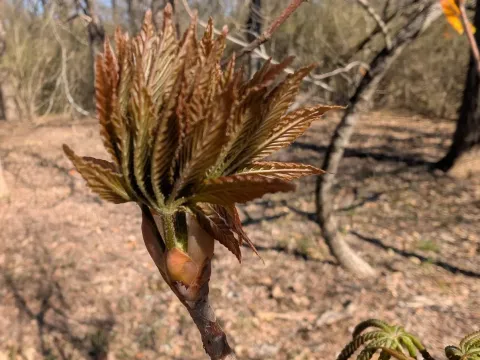
Ohio buckeye
Aesculus glabra Willd.
The Ohio buckeye, or Aesculus glabra, is a deciduous tree belonging to the Sapindaceae family. Native to the central United States, this species is well-known for its adaptability and distinct botanical characteristics, such as palmate leaves and panicles of flowers.
What the section contains
Ohio buckeye
Cultivation of this tree requires deep, moist, and well-drained soil rich in organic matter. While it thrives in bottomlands and along streams in the wild, it remains highly adaptable to various soil types, provided they are not excessively sandy or waterlogged for long periods.
In terms of climate requirements, the Ohio buckeye exhibits significant winter hardiness. It performs best in full sun to partial shade settings, where the canopy can develop symmetrically, providing excellent seasonal color during autumn months.
Agronomic maintenance includes regular irrigation during the establishment phase and periods of drought. Proper mulching around the root zone helps conserve moisture and maintain favorable soil temperature conditions, which is crucial for younger specimens.
The primary use of this species is ornamental landscaping in parks, urban areas, and arboretums. Its unique growth habit and early flowering season make it a valuable addition to diverse planting schemes and botanical projects.
One of the main threats to the health of Aesculus glabra is leaf blotch, a fungal disease that can cause significant discoloration of the foliage. Proper sanitation, such as removing fallen leaves, helps reduce the fungal spore load in the environment.
Pests such as the leafminer can affect the appearance of the leaves. In severe cases, these insects cause premature browning of the foliage, though the overall survival of the tree is rarely compromised by these infestations alone.
The tree may also be susceptible to scale insects and mites, especially when stressed by environmental factors like poor soil quality or inadequate watering. Integrated pest management strategies are effective in mitigating these issues.
Regular monitoring of the tree canopy for signs of stress or pest activity is recommended for professional arboriculture management. Early detection allows for prompt action before any potential damage impacts the tree's long-term health.
Maintaining high vigor through proper fertilization and pruning of dead wood is the best defense against pests and diseases. With proper care, the Ohio buckeye remains a resilient and attractive landscape asset for many years.