
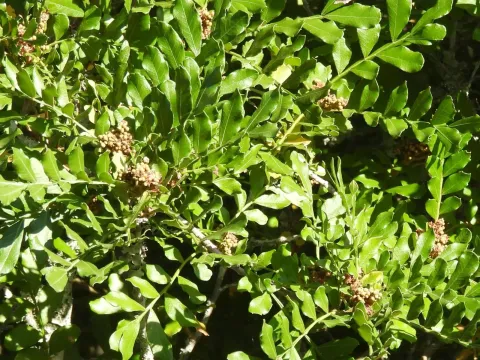
Hippobromus
Hippobromus
Hippobromus is a monotypic genus of evergreen trees and shrubs belonging to the Sapindaceae family. Native to the southern regions of Africa, this plant thrives in diverse environments, ranging from thickets to open forest margins.
What the section contains

Hippobromus
The plant demands a location with full exposure to sunlight to ensure proper canopy development. It prefers well-drained, fertile soil, showing high adaptability to a range of pH levels, as long as waterlogging is avoided through proper drainage systems.
In terms of climate, Hippobromus prefers mild subtropical weather. While it demonstrates significant tolerance to periodic dry spells once established, consistent moisture is vital during the initial establishment phase of young saplings.
Effective agrotechnical practices include mulching around the root zone, which helps regulate soil temperature and retain essential moisture levels during the peak of the summer heat.
Spacing is another crucial factor for health; adequate air circulation must be maintained around the crown of the plant to prevent the build-up of excess humidity that could lead to unfavorable physiological changes.
The primary economic use of Hippobromus is found in the horticultural industry, where it is utilized as an ornamental plant in landscaping. Its dense foliage and aesthetic appeal make it a preferred choice for large gardens.
Due to its rapid growth in favorable conditions, it serves as an excellent candidate for building windbreaks and privacy screens in subtropical landscapes, providing both functional and visual benefits.
Traditionally, parts of the plant have been used for their aromatic properties. Scientific interest remains high regarding the essential oils contained within its tissues, which have shown potential in specific biochemical applications.
The wood, while not suited for heavy structural work, is useful for light carpentry and woodworking crafts, often harvested on a small scale from maintenance pruning operations.
Environmental restoration projects also benefit from Hippobromus, as its robust root system contributes to soil stability, particularly on sloped terrain where natural reforestation is being encouraged.
The plant is susceptible to several insect pests, most notably scale insects and mealybugs, which settle on stems and leaves. These pests sap nutrients from the plant, often leading to reduced growth and chlorosis.
Fungal pathogens represent another significant threat, often manifesting as leaf spot diseases when moisture levels are uncontrolled or when plants are kept in stagnant, humid environments without adequate ventilation.
Root rot, induced by waterlogged soil conditions, is the most detrimental health issue. It is often a result of poor site preparation or excessive irrigation, which damages the root cortex and prevents nutrient uptake.
Mechanical damage to the bark, whether from maintenance equipment or wildlife, can provide an entry point for wood-boring insects, which can lead to structural weakness and secondary decay within the trunk.
Proactive management involves regular sanitary pruning to remove infected tissue and the application of targeted biological control agents to manage pest populations without harming the surrounding ecosystem.