
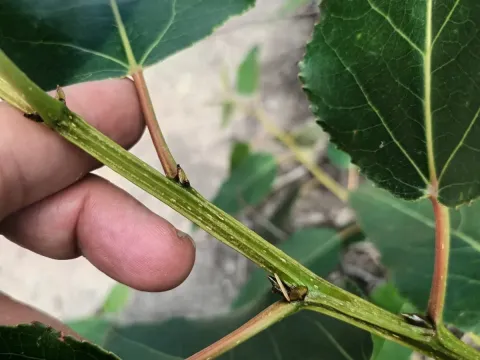
Jack's poplar
Populus jackii
Jack's poplar (Populus × jackii) is a hybrid tree belonging to the Salicaceae family. It is a crossing product between balsam poplar and eastern cottonwood, renowned for its vigorous growth rate and adaptability to various temperate environments.
What the section contains
Jack's poplar
The culture thrives in fertile, well-drained loamy or sandy soils. It has a high demand for water, especially during the active vegetation season, yet it is intolerant to waterlogged conditions where roots might suffer from oxygen deficiency.
Climate adaptability is one of the key strengths of Jack's poplar. It possesses a high level of winter hardiness, enabling it to survive in cold climates. Full exposure to sunlight is essential for maintaining a high photosynthetic rate and achieving optimal biomass accumulation.
Agricultural practices for this species focus on site preparation and competition management. Weed control during the establishment phase is vital to ensure that saplings have sufficient access to light, water, and nutrients, which prevents stunted growth in the early stages.
Commercial utilization of Jack's poplar is geared toward short-rotation forestry. Its wood is highly valued for cellulose production, plywood manufacturing, and biomass harvesting, making it an efficient choice for landowners interested in sustainable forestry investments.
Disease management is a critical aspect of Jack's poplar plantation maintenance. The species is susceptible to leaf rust and septoria leaf spot, which can impair tree vigor if left unchecked, particularly during humid and warm summers.
Insect pests, such as leaf beetles and various aphid species, can cause substantial damage to young foliage. Integrated pest management strategies are often required to maintain plantation health and ensure that yield targets are met consistently.
Fungicide applications are recommended when early symptoms of fungal infection appear. Maintaining adequate tree spacing helps improve airflow within the plantation, reducing the humidity levels that favor the spread of pathogenic spores.
Proper fertilization and irrigation management play a role in strengthening the tree's natural defense mechanisms. Healthy, well-nourished trees are generally more resilient to incidental pest infestations and environmental stressors than those growing under limiting conditions.
Regular monitoring and documentation of pest population densities allow for precise and efficient intervention. Implementing these practices helps minimize the need for broad-spectrum chemical treatments, supporting a more sustainable approach to industrial forest management.