
Kharkiv poplar
Populus charkowiensis
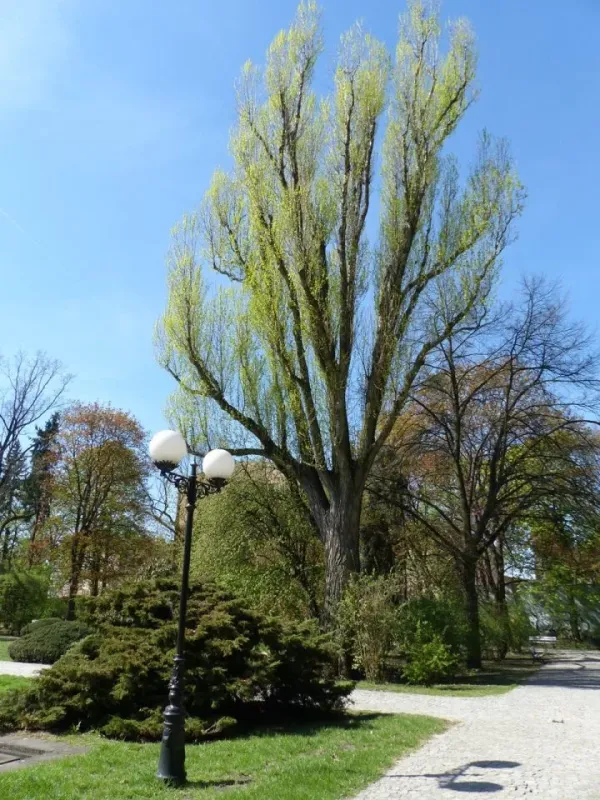
Description
Growing requirements
The Kharkiv poplar (Populus charkowiensis) belongs to the Salicaceae family. It is a recognized hybrid variety known for its remarkable growth rate and efficiency in biomass production, making it a valuable asset in modern forestry.
This species requires deep, fertile, and moist soils to reach its full potential. While it can adapt to various types of terrain, it thrives best in alluvial soils where moisture availability is constant throughout the growing season.
The plant is light-demanding, necessitating open spaces for plantation development. Adequate thinning is essential in intensive forest management to ensure that individual trees have enough space to develop strong crowns and trunks.
Regarding climate, the tree is well-adapted to temperate zones with distinct seasonal cycles. It shows good winter hardiness, allowing it to be cultivated across a wide geographic range where water levels remain sufficient.
Commercially, the Kharkiv poplar is used for pulp production, plywood, and renewable energy wood. Its rapid maturation makes it a key species for reforestation projects and carbon sequestration efforts in agricultural landscapes.
Main diseases and pests
Fungal diseases, particularly rust and canker, pose the most significant threat to plantation health. These pathogens tend to flourish in conditions with poor drainage or high humidity, compromising the structural integrity of the wood.
Insect pests like the poplar leaf beetle and various moth larvae are common problems. These pests damage the foliage, reducing the tree's photosynthetic capacity and significantly slowing down the annual growth rate.
Effective management includes maintaining optimal plant spacing to promote air circulation. Removing debris and infected branches helps to mitigate the risk of disease transmission within the stand.
Application of fungicides is recommended only when preventive measures fail. Integrated Pest Management (IPM) strategies, combining biological and mechanical control, are preferred to maintain the long-term health of the trees.
Strict adherence to silvicultural standards, including proper soil preparation and nutrition, significantly enhances the tree's innate resistance to environmental stress and biotic damage.