
Indian willow
Salix tetrasperma
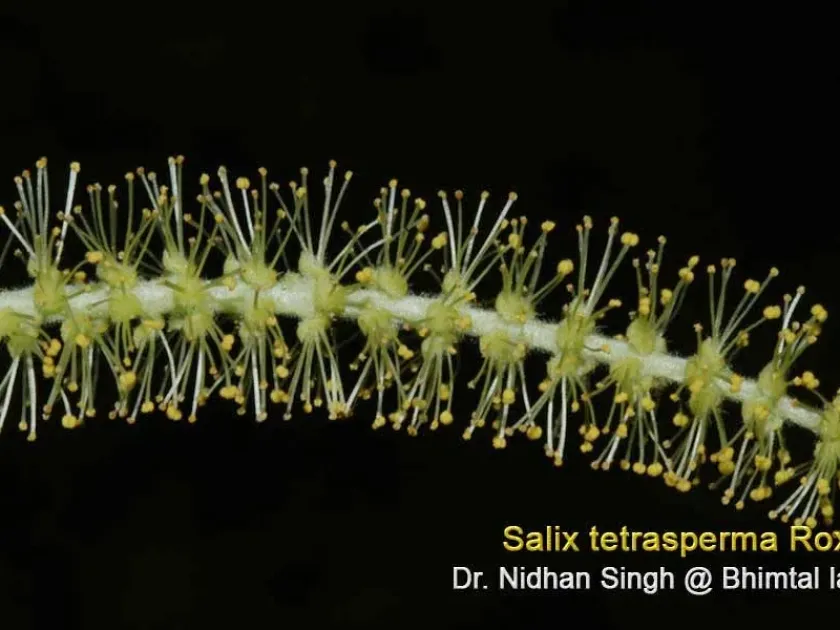
Description
Growing requirements
The Indian willow (Salix tetrasperma) is a member of the Salicaceae family. It is a medium-sized deciduous tree native to tropical and subtropical regions of Asia, commonly found in riparian habitats and along riverbanks.
This species thrives in warm climates and requires consistent warmth throughout the year. Unlike many temperate willow species, it is highly sensitive to frost, making it suitable primarily for regions without extreme winter temperatures.
Regarding soil requirements, the Indian willow prefers deep, moist, and fertile alluvial soils. It displays a high tolerance for waterlogged conditions, which makes it an excellent candidate for stabilizing banks and preventing soil erosion.
Cultivation practices involve selecting sites with adequate moisture or providing irrigation to ensure steady growth. The species is fast-growing and responds well to standard forestry management practices aimed at optimizing biomass production.
Economic uses of the tree include timber for light furniture, boxes, and tool handles. Additionally, its bark is rich in tannins and has historically been used in local medicine and tanning processes, while the tree itself contributes significantly to local ecological restoration.
Main diseases and pests
The species is susceptible to various pests, including leaf-eating beetles and wood-boring insects, which can compromise the structural integrity of the timber if infestations are left unmanaged.
Fungal diseases, such as leaf rust and powdery mildew, represent common threats in humid environments where air circulation is restricted within dense tree stands.
Effective management strategies include conducting regular inspections to detect early signs of pathogens and ensuring appropriate tree spacing to facilitate airflow and sunlight penetration.
Maintaining tree vigor through proper soil nutrition is essential, as healthy, fast-growing trees are generally more resilient to pest attacks and secondary infections compared to stressed individuals.
In cases of severe outbreaks, selective application of biological control agents is recommended to maintain the ecological balance of the plantation while protecting the crop from significant economic loss.