
Korean poplar
Populus koreana
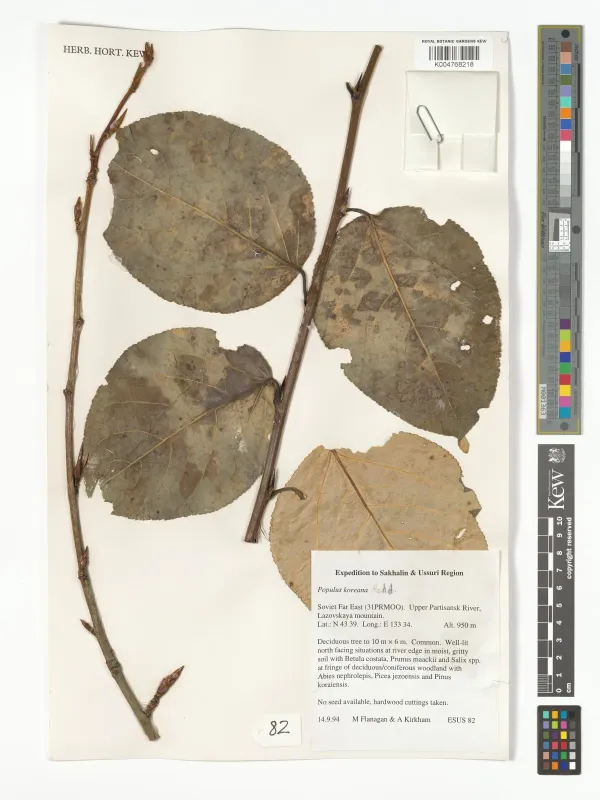
Description
Growing requirements
The Korean poplar (Populus koreana) is a deciduous tree belonging to the Salicaceae family, reaching heights of 20 to 30 meters. It features a robust root system and a wide-spreading crown, making it an essential species for reforestation and environmental land management.
The native range of this species covers the Far East, including the Korean Peninsula, Northeast China, and bordering Russian regions. It is highly valued for its frost resistance and adaptation to harsh climates, thriving in areas with long, cold winters.
For optimal growth, the Korean poplar requires deep, fertile, and moderately moist soils. While the species is quite versatile, it performs best on sandy loam and light loamy soils, particularly near riverbanks where groundwater levels provide a consistent water supply.
Agronomic practices focus on providing sufficient sunlight, as the Korean poplar is a light-demanding species. In the early stages of development, it is crucial to protect saplings from drying winds and to cultivate the soil around the base to ensure proper aeration.
The tree is primarily used in commercial forestry for pulpwood production, as well as for establishing windbreaks to prevent soil erosion and for urban landscaping, where it is prized for its rapid growth and air-purification capabilities.
Main diseases and pests
Common fungal diseases affecting this species include leaf rust and powdery mildew, which tend to proliferate in conditions of high humidity and poor air circulation within dense plantations.
Major insect pests include the poplar leaf beetle, various species of aphids, and the poplar moth, all of which can significantly reduce the vitality and ornamental value of the trees.
Effective disease control involves regular sanitary pruning of infected branches and the application of fungicides during the active growing season when symptoms first appear.
Managing pest populations requires the use of targeted insecticides and maintaining clean planting sites by removing fallen leaves, which often serve as overwintering habitats for larvae.
Ongoing monitoring of bark and canopy health is essential for early detection of infestations, allowing for timely intervention and preservation of the forest stand health.