
Hybrid willow
Salix hybrids
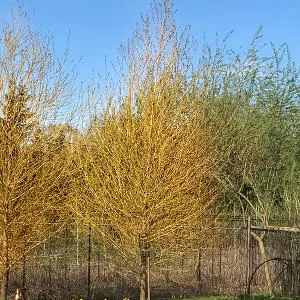
Description
Sowing dates
Planting hybrid willow is typically carried out in the spring once the soil temperature consistently reaches 5–8 degrees Celsius. April is the most favorable month as it allows the cuttings to take full advantage of spring moisture for establishment.
The standard propagation method involves using hardwood cuttings, approximately 20–25 centimeters long. These are inserted into the soil so that only 2–3 buds remain above the surface, which encourages rapid root system development and robust shoot growth.
Planting density is determined by the intended use of the biomass. For large-scale energy plantations, a common spacing is 0.6 by 1.5 meters, which provides sufficient room for growth while facilitating mechanized maintenance.
Ensuring firm contact between the cutting and the soil is essential to prevent desiccation. The use of specialized planting machinery is highly recommended to achieve optimal placement and improve overall survival rates across large fields.
While autumn planting is possible in milder climates, spring remains the preferred window to avoid frost heaving and winter damage during the critical first year of growth.
Growing requirements
Hybrid willow belongs to the Salicaceae family and is a result of selective cross-breeding within the Salix genus. It is highly valued for its exceptional growth rate and ability to adapt to diverse ecological conditions.
This crop has a high demand for water and thrives in fertile loamy or sandy soils with a high water table. While it tolerates waterlogged conditions better than most crops, it requires adequate moisture throughout the growing season to reach its yield potential.
The optimal pH range for hybrid willow is between 5.5 and 7.5. On acidic soils, liming is recommended to ensure nutrient availability, which directly correlates with the vigor of the shoots and overall plantation health.
As a light-demanding crop, hybrid willow requires full sun exposure to maintain high photosynthetic activity. Shady conditions can lead to spindly stems and reduced biomass production, which is detrimental to overall productivity.
Effective weed control is mandatory during the first two years of the plantation cycle. Without competition management, young willow plants struggle to establish their root systems and secure the necessary resources for rapid development.
Yield
The productivity of hybrid willow is measured in tonnes of dry matter per hectare annually. Under intensive management, these plantations can produce 10–20 tonnes of dry biomass, serving as a reliable source of renewable energy.
One of the primary benefits of this crop is its ability to coppice, or regenerate from the stump after harvest. A well-managed plantation can remain productive for 20 to 25 years without the need for replanting.
Maximizing yield involves regular nutrient management based on periodic soil testing. Nitrogen, phosphorus, and potassium applications should be balanced to support the rapid metabolic demands of the growing stems.
Yield performance is also linked to the genetic quality of the willow clone. Selecting varieties that are specifically tested and adapted for the local climate is crucial for achieving consistent biomass outputs across the harvest cycle.
Maintaining proper plant density by thinning out weak or diseased specimens ensures that the remaining stems have adequate access to sunlight, water, and soil nutrients throughout the duration of the plantation's life.
Main diseases and pests
Leaf beetles are among the most significant pests affecting hybrid willow plantations. Heavy infestations can cause extensive defoliation during the growing season, which significantly reduces the rate of biomass accumulation.
Fungal diseases, including rusts and leaf spots, pose a risk, especially in environments with high humidity and poor air circulation. Spore spread can be rapid, requiring proactive monitoring and management of the plantation.
Bacterial canker can weaken the stems and affect wood quality. Such infections are often introduced through physical wounds or cracks in the bark, making it important to avoid mechanical damage during plantation operations.
Preventive measures include the selection of resistant cultivars and ensuring adequate spacing to promote airflow. Integrated Pest Management (IPM) strategies, combining biological controls and selective treatments, are the most effective approach.
Wildlife browsing, particularly by deer or rodents, can cause significant damage to young shoots. Protecting the perimeter of the plantation and maintaining clear rows can reduce the attractiveness and accessibility for such animals.
Harvesting
Harvesting hybrid willow takes place during the dormant winter season. This timing ensures that the wood has minimal moisture content, which enhances its storage stability and improves its calorific value for energy production.
The process is typically fully mechanized using forage harvesters equipped with specialized cutting heads. These machines cut the stems and chip them in a single operation, loading the material directly into trailers for transport.
The harvest cycle usually occurs every 3 years. This interval allows the stems to reach the ideal diameter for processing while ensuring that the stump retains enough vigor to support rapid regeneration in the following spring.
Precision harvesting is vital: the cut should be as close to the ground as possible to encourage healthy resprouting. A high stubble can lead to weaker regrowth and potentially reduce the overall lifespan of the plantation.
Post-harvest storage requires well-ventilated areas to allow the wood chips to dry naturally. Reducing the moisture content to below 30 percent is crucial to preventing fungal degradation and maximizing the energy density of the fuel.