
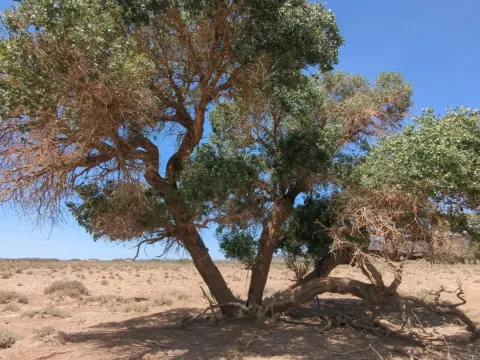
Euphrates poplar
Populus euphratica
The Euphrates poplar (Populus euphratica) is a remarkable species belonging to the Salicaceae family, renowned for its extraordinary tolerance to saline soils and arid environments. It is one of the few tree species capable of thriving in extreme desert conditions.
What the section contains
Euphrates poplar
Originating from the arid regions of Central and Western Asia, this species has evolved to withstand severe temperature fluctuations. Its natural distribution is largely tied to river basins where it forms unique riparian forests.
Botanically, it exhibits high morphological plasticity, with leaves changing shape as the tree matures. This adaptation allows the tree to manage water loss effectively in high-heat environments, ensuring its survival during long dry spells.
The species requires access to groundwater to maintain vigor, despite its reputation for drought resistance. It performs exceptionally well in soils with high salinity levels that would prove fatal to most agricultural crops.
Cultivation requires full sun exposure and ample space for root development. In agroforestry projects, it is used as a pioneer species to stabilize sandy soils and restore degraded desert landscapes.
The timber of the Euphrates poplar is valued for its durability and resistance to decay, making it a primary building material in remote desert areas. It is frequently used for construction, furniture, and tool manufacturing.
In local agricultural systems, the tree serves as an essential source of fodder. Livestock, particularly camels and goats, graze on the leaves and young shoots, providing a crucial food supplement in resource-scarce regions.
The species also provides significant biomass for fuel. In regions where coal or gas is unavailable, the deadwood and trimmings are gathered and used for domestic heating and cooking purposes.
The bark and leaves contain chemical compounds used in traditional medicine for various ailments. Ongoing research explores the chemical properties of the species for potential applications in modern pharmaceutical industries.
As a windbreak, the Euphrates poplar protects agricultural fields from shifting sand dunes. Its ability to create a microclimate helps improve crop performance in neighboring fields.
The most significant threat to the Euphrates poplar is the disruption of natural water flow in river systems due to dam construction. A lack of periodic flooding prevents seed germination and leads to the decline of mature forests.
Pests, such as defoliating insects and wood-boring beetles, pose a recurring challenge. Outbreaks can result in significant loss of canopy density and reduced overall productivity of the stands.
Pathogenic fungi are another concern, particularly in trees already stressed by lack of water. These infections can weaken the structural integrity of the trunks and lead to tree mortality.
Overgrazing remains a major obstacle for natural regeneration. The removal of saplings by livestock limits the long-term sustainability of forest patches and slows down the expansion of cultivation areas.
- Water table depletion from upstream dams
- Infestation by wood-boring insects
- Fungal diseases in stressed specimens
- Inhibitive overgrazing by livestock
- Loss of habitat due to desertification